

Table of contents
Picture two Global Capability Centers (GCCs) hitting the same outage on the same night.
At first, an alert fires, an engineer wakes up & the next hour disappears into log files while the business waits. While at other GCC, the system spots the pattern, reroutes traffic, restarts the failing service and simply logs what happened.
Both are GCCs. Both have invested in cloud infrastructure and strong engineering teams. But one is running operations the standard way, just with more people and more tools and the other has moved past reacting to problems altogether. That gap, call it GCC 4.0 or the Autonomous GCC, is what separates the centers which are pulling ahead from the ones which are still catching up.
Operational Autonomy Is the Next Step
As GCC mandates growth and get more complicated, the old way of running things starts to show cracks. Automation inside modern GCCs has migrated directly into the operational core of the global enterprise:
- Cloud operations.Managing multi-cloud, multi-tenant environments through automated provisioning, dynamic resource allocation & workload balancing that adjusts itself as demand shifts.
- Infrastructure management.Turning old monolithic systems into event-driven microservices that handle heavy concurrency and recover faults without someone stepping in.
- IT service management.Ticket routing, incident response, and service requests handled by digital agents working around the clock, across every time zone the business runs in.
- Cybersecurity operations.Running continuous vulnerability scanning, automated compliance tracking, and real-time threat isolation across the network.
Technological Groundwork
Core technology layer that powers this shift:
- AIOps & Intelligent Orchestration: Autonomous AI agents process massive telemetry data streams, dynamically discovering dependencies and coordinating complex workflows across hybrid platforms
- Self-Healing Infrastructure: Built-in resilience mechanisms such as automatic retries, circuit breakers, rate limiting, and fallback routing allow systems to resolve runtime exceptions without human intervention
- Predictive Monitoring & Observability: Advanced machine learning models identify performance anomalies and infrastructure stress long before they escalate into outages, executing pre-emptive corrective actions in real time
How Sify Empowers The Autonomous GCCs
Beyond automation, autonomy requires visibility across the operational environment and the ability to act on what that visibility reveals. A network event can affect an application. An application issue can trigger a cloud resource problem. A security event can require action across both when these environments are managed in isolation; even highly automated systems still depend on people to connect the dots.
This is where Sify’s managed services can solve enterprise roadblocks. Sify brings together Network Operations, Security Operations Centers, AIOps, CloudOps and Managed Services across the infrastructure stack, giving GCCs a more connected operational layer. Its approach combines predictive monitoring and observability with AI-driven orchestration and closed-loop remediation, allowing operational events to be detected, analysed, and acted on with less manual intervention.
The model goes beyond simply identifying that something has gone wrong. By correlating events across the infrastructure, teams can identify dependencies, determine the appropriate response, and automate remediation where the situation allows. This reduces the need for operations teams to manually investigate and coordinate every incident, while giving them greater visibility when human intervention is required.
For an Autonomous GCC, the goal is to build an operating environment where systems can identify issues, coordinate the right response, and recover with minimal human intervention. That gives the teams more room to focus on product engineering, AI governance, and the transformation initiatives that are expanding their role within the enterprise.
FAQs
It’s a GCC where routine IT operations, infrastructure management, and day-to-day operational decisions run on intelligent automation, with people stepping in only when something genuinely needs a human call.
People stop spending their day clearing tickets and start spending it on enterprise architecture, AI governance, system design & the handful of genuinely complex problems automation can’t solve on its own.
AIOps, self-healing infrastructure, predictive monitoring and orchestration working together across cloud, network, and ITSM. These systems run automated workflows in real time, which is what keeps things consistent and available across every region the business operates in.
Sify acts as the partner that makes the shift possible, taking GCCs from reactive IT operations to ones that mostly run themselves. Its managed services cover Network Operations, Security Operations Centers, CloudOps and AIOps, combined into predictive monitoring, full observability, and unified infrastructure management. That combination is what lets GCCs get rid of operational silos.
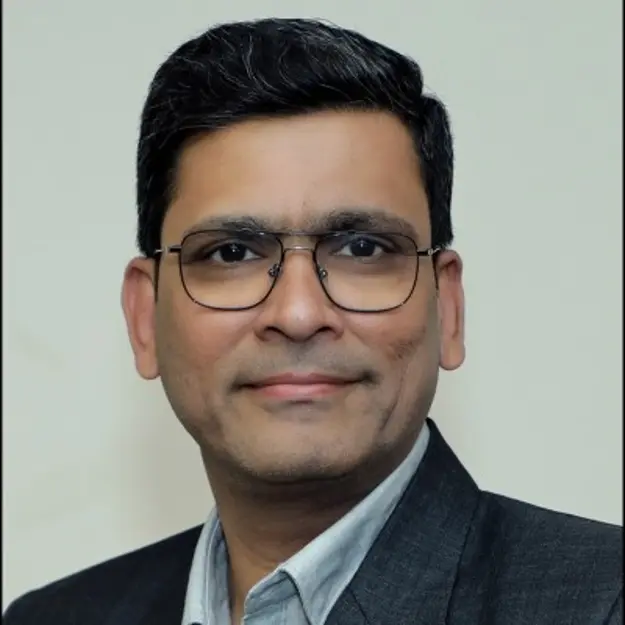
Murtaza Bhatia is a technology and cybersecurity leader with over two decades of experience across IT infrastructure, cybersecurity, cloud and enterprise technology solutions. As Vice President & Practice Head – Cybersecurity at Sify Technologies, he leads the company’s cybersecurity practice, focusing on helping enterprises strengthen their security posture, simplify security operations and build AI-ready digital environments.
Based in Mumbai, Murtaza is responsible for driving cybersecurity strategy, business growth, solution development and customer engagement across industries. His experience spans enterprise security, data center technologies, cloud, consulting and managed security services, with a strong focus on aligning security frameworks with evolving business and technology requirements.
Before joining Sify, Murtaza held leadership roles at organizations including NTT DATA, NTT Ltd. and Dimension Data, where he led cybersecurity, presales and technology consulting functions across enterprise accounts and industry verticals. His focus areas include cybersecurity simplification, AI-led security operations, enterprise resilience and securing AI ecosystems. He actively engages with enterprises on how AI and cybersecurity can work together to improve operational efficiency while maintaining strong governance and protection frameworks.