


Sify Technologies
Admin

CCaaS – Using technology to enhance customer engagement
The business world has always been competitive, but never before has the battle for customer loyalty been fiercer.
Organizations are plowing in more money and effort to step up their customer care strategies and with good reason! Reports and surveys reveal the importance of customer engagement in buying decisions – 86% of the consumers are willing to pay more for better customer service and 54% of Millennials say that they stopped doing business because of poor customer service.
In these competitive times, businesses have turned to technology to get the most out of their contact centers and to provide a pleasant customer experience to buyers.
When it comes to using technology to optimize Contact Center functions – CCaaS (Contact Center as a Service) instantly springs to mind. It is the perfect example of using cloud-computing platforms to integrate the latest technology with your contact center while keeping costs low.
Contact Center as a Service – Key Technologies
Inbound & Outbound Call Automation
There is a great deal of technology behind every call that comes into a call center. Some of these are automatic call distributors (ACD) – intelligent routing of calls to agents, IVR (Interactive voice response) – automated phone system providing information to callers, voice biometrics, intelligent call back, universal queuing, call recording and now, of course, integration of multiple communication channels to provide customer engagements across all platforms.
For agents making outbound calls, technologies such as predictive dialer – automatically dial from a contact list, campaign management systems and email response management software helps in increasing productivity.
System Integrations
With services like CCaaS, contact centers can access a wider level of integration across the organization. From integrating existing knowledge database (comprising customer profiles, call histories, buying trends, etc.) to business CRM software – access to a plethora of information allows agents to serve customers better and faster. CCaaS also facilitates secure online payments via integration with bank websites and bank mobile applications.
Quality check and Admin Control
Call monitoring and call quality control has now been enhanced by adding new systems such as an administrative control dashboard with a range of web supervisory features from silent monitoring to whisper coaching. Supervisors can now observe and step into help agents and prevent unpleasant experiences.
Analytics
With the explosion in Internet usage, data analytics tools are becoming more and more refined and for predicting customer behavior, contact centers must also utilize analytical tools to better understand customer feedback and needs. While all contact centers use real-time reports & analytics to evaluate and improve agent performances, there is also a move towards incorporating speech, chat, and text analytics to identify customer needs.
Customer experience is all set to overtake product and price as the most vital component of the business strategy by 2020.
There is no doubt that with the rise of social media and increasing use of Internet, more choices have opened up for buyers and they have become more aware and better informed. Organizations are well aware of this and are investing more and more in gaining and retaining customers – along with enhancing the human interactions by providing the right training, integrating technology is the only way organizations can hope to handle the huge volume of multi-channel customer contacts, smartly while being cost-efficient.


Sify Technologies partners with Interxion Marseille to cater to the burgeoning demand in traffic between India and Europe
Chennai, 11 August 2017: Sify Technologies Limited (NASDAQ: SIFY), a leader in Telecom and Data Center centric IT services in India with global delivery capabilities in partnership with INTERXION HOLDING NV (NYSE: INXN), a leading provider of carrier and cloud-neutral colocation Data Center services in Europe, today announced the launch of its 7th network Point of Presence (PoP) at Interxion’s MRS1 Data Center in Marseille, France.
Sify’s network expansion to Marseille enhances its ability to provide very high availability network of mission-critical applications between Europe and its 9000+ Enterprise customers on the Indian sub-continent. In addition, Sify can now enable interconnect for their wholesale partners seeking state-of-the-art solutions to reach India from Marseille, Europe’s gateway to India, the Middle East and Africa. Sify now connects all the major global data-transit locations with these 7 PoPs.
“With four submarine cable systems from India landing directly in Marseille, it was the logical location for us to expand our network presence,” said Mark Ryder, Managing Director Europe, Sify. “The large and growing community of network and content providers available to partner with in Marseille accelerates our ability to cater to the burgeoning demands of our clients.”
“Sify will provide our customers with effective solutions to efficiently handle the large increase in content that is being exchanged between Europe and India,” said Mike Hollands, Director of Market Development and Strategy, Interxion. “Sify’s connectivity to 1500 cities and 45 Data Centers in India over a common data telecom infrastructure provides huge value to the community of interest present in our Marseille facility.”
Interxion Marseille is Europe’s telecommunications gateway to India, Asia, Middle East and Africa. With 13 submarine cable systems form these regions terminating in Marseille, the city has become a fast-growing interconnection hub. There are now 120 international and national network service providers, four Internet Exchanges and leading cloud and content providers using Interxion Marseille to interconnect and exchange Internet traffic and content with one another.
About Interxion
Interxion (NYSE: INXN) is a leading provider of carrier and cloud-neutral colocation Data Center services in Europe, serving a wide range of customers through 45 Data Centers in 11 European countries. Interxion’s uniformly designed, energy efficient Data Centers offer customers extensive security and uptime for their mission-critical applications. With over 600 connectivity providers, 21 European Internet exchanges, and most leading cloud and digital media platforms across its footprint, Interxion has created connectivity, cloud, content and finance hubs that foster growing customer communities of interest. For more information, please visit www.interxion.com.
About Sify Technologies
Sify Technologies Limited (NASDAQ NM: SIFY), is an acknowledged ICT leader in the Telecom and Data Center centric IT services space with global delivery capabilities. Among the very few Enterprise class player in India, Sify, today has presence in 1500 cities in India and in North America, United Kingdom and Singapore.
More than 9000 Enterprises access Sify’s IT services that’s focused on the Data Center and Cloud platform and connected through India’s largest MPLS network. As a truly converged ICT solutions and services provider, Sify is the preferred IT Services partner with a full suite of services ranging from Telecom connectivity services to Data Center transformation services along with Application and Security Services delivered on the same infrastructure.
Sify, Sify Technologies and www.sifycorp.com are registered trademarks of Sify Technologies Limited
For further information, please contact:
Mark Ryder
Operations – UK & Europe
(M) +447429169426
mark.ryder@sifycorp.com
Sify Technologies Limited
Praveen Krishna
Investor Relations & Public Relations
+91 44 22540777 (ext.2055)
praveen.krishna@sifycorp.com
20:20 Media
Nikhila Kesavan
+91 9840124036
nikhila.kesavan@2020msl.com
Grayling Investor Relations
Shiwei Yin
+1-646-284-9474
Shiwei.Yin@grayling.com

The trends and technologies shaping the future of Contact Centers
Contact Centers are in a state of constant evolution! With customer engagement rated as one of the most critical factors for the success of a product or service, businesses are striving to perfect the customer care scenario every single day. In this race to keep customer loyalty, companies are turning to technology to deliver exceptional customer service.
In the last couple of years, to keep up with the changing needs and behavior patterns of buyers, Contact Center technology has evolved considerably. We take a closer look at some of the latest trends in the field.
The trends and technologies shaping the future of Contact Centers
Digital Transformation of Customer Services
The digital way of working has now been fully embedded into the business operations of most companies. As newer technologies such as cloud, web based applications, mobility, and data analytics change the business landscape they also have an impact on how contact centers are operated. Adoption of these technologies, especially the move to cloud platforms, has resulted in altering the entire cycle of customer engagement – from dealing with the first client contact occurring across multiple channels to providing intelligent, data analysis backed the resolution to customer issues.
Omni channel Models
From traditional phone calls to social media messages – Customers are using a variety of communication channels to approach businesses. Needless to say, businesses are also turning to a more holistic customer engagement approach that uses unified Omni-channel communication models – bringing text, phone, chat, email, social, video calls, etc. under one umbrella – to provide a more personal and satisfying experience to the customer.
Analytics and Customer Satisfaction
To consistently deliver exceptional customer experiences, businesses need to consider more than the final resolution of the customer requirement; it is imperative to keep a check on the customer experience during the journey towards resolution and overall quality of the calls. This can be achieved by using analytical tools to improve the Contact Center operations. Customer care centers are using real time reports and monitoring solutions to keep a check on engagement quality and are also incorporating cutting edge analytical tools to study behavioral patterns in speech, text or chats to predict customer behavior.
Remote agents
With reliable web based communication tools and access to real time monitoring Contact Centers are now employing more and more remote agents; thereby efficiently managing different time zone requirements while reducing overhead costs.
Artificial Intelligence
AI, the latest buzzword in the IT landscape, is now being tested and incorporated in Call centers as well. AI algorithms are mainly being used to analyze call data and historical records to foretell customer behavior – producing dependable results in minutes, something that would have taken an analyst days to complete. AI technology is also being explored to place virtual call agents to handle some of the more repetitive and simpler customer interactions.
Going ahead, companies and consumers alike will be putting more and more emphasis on customer care as a brand differentiator rather than as a support function. Although recruiting and training agents form a vital part of call center operations; to stand out companies are exploring technology integrations to make their operations more efficient. And while technologies like Artificial Intelligence are still being developed and implemented, sophisticated cloud based offerings such as CCaaS (Contact Center as a Service) are proven models, which bring an added level of productivity with enormous cost benefits to traditional Contact Centers.
As India’s leading fully converged ICT Company, Sify is using its decades of experience in network and Data Center services to present the most comprehensive Contact Center as a Service platform in India.
Our extensive expertise has allowed us to craft a service offering, which is highly flexible, scalable and future proof. Sify’s CCaaS provides all Contact Center applications under one umbrella-from branch connectivity and video conferencing to 100 % reliable voice calls. Delivered via the cloud, Sify’s CCaaS is a multi channel platform, which can easily meet the most exacting contact center requirements.
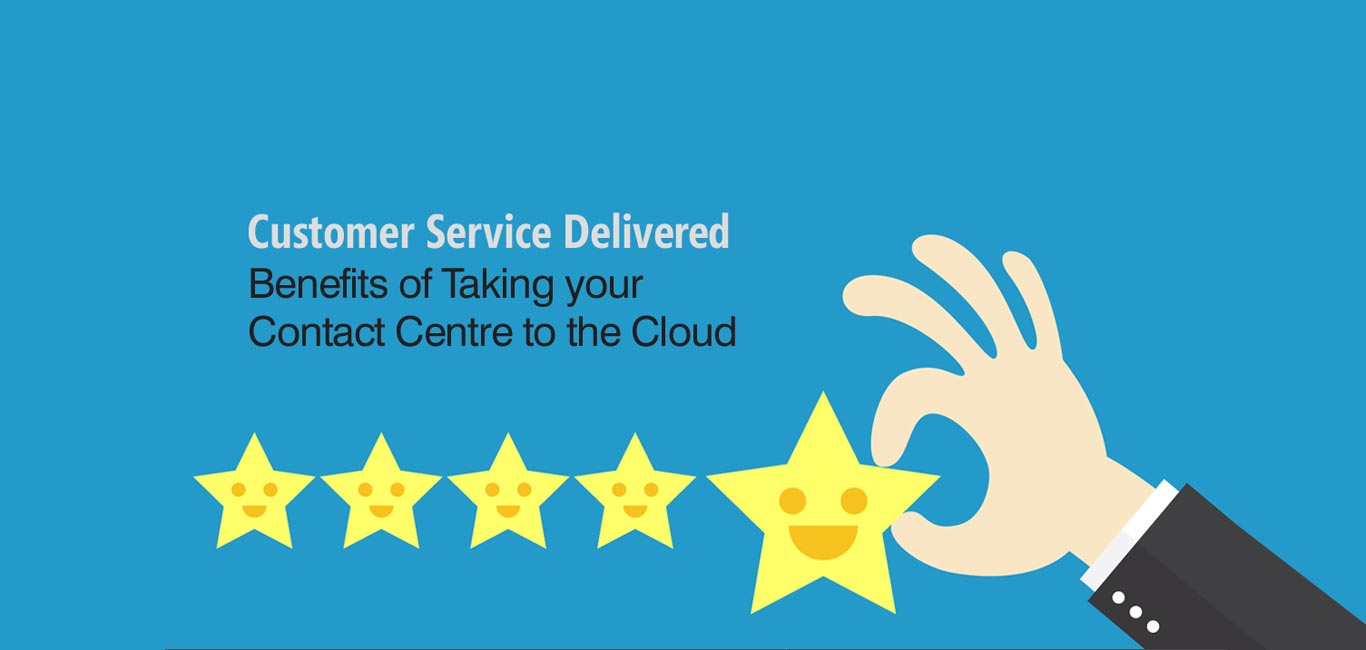
3 Key Benefits of taking your contact center to the cloud (CCaaS)
The key to thrive in a “Customer is the King” economy is being extremely responsive to their ever-evolving demands while serving as a pacesetter for the competition. Customers are demanding a wider choice of contact channels, stronger relationships, flexible customer service options and quick-to-respond customer service. All these factors have increased the pressure on Contact Centers; they must deliver the best possible customer experience – consistently!
Organizations are progressively moving towards ‘as a service’ technologies as they look for models that are flexible and enable better responsiveness and service quality in today’s customer centric environment. Contact center service providers’ cloud-based offerings focus on cloud as a deployment option as against the conventional on-premise alternative. By taking the contact center to the cloud, businesses get a robust, flexible, cost-effective and multi-channel solution with unified delivery and professional management.
3 main Benefits of Cloud-based Contact Centers
Flexibility and Scalability
A traditional contact center is based on the intended contact service agent capacity, the approximated volume of customer interactions and an estimate of the type of channel/feature access required. On the other hand, cloud solutions enable businesses to operate fluid contact center operations, where they could modify the scale of operations, swiftly add functionalities, switch the mix of communication channels, handle unanticipated spikes in the interaction volume or draw on enterprise resources. Flexibility and scalability afford unlimited possibilities almost instantly to the businesses without the prohibitive expense of additional infrastructure/related software and the associated time to implement and operate the revised operations.
Substantial Cost Savings
Cost arguments in favor of cloud solutions versus traditional Data Centers are apparent right from the start – the former helps transfer the financial load from CAPEX (Capital Expense) to OPEX (Operating Expense). Switching to an OPEX model brings with it more simplicity and predictability with a ‘pay-as-you-go’ model. It eliminates the challenge and risk of making large capital expenses towards infrastructure at one given point; making it easier to budget for growth. In comparison, non-cloud contact centers cannot achieve this desired flexibility without investing a sizeable amount in infrastructure and are unable to facilitate businesses to right-size their operations. Cloud solutions are cash flow friendly as recurring costs are coupled only with an associated growth spike, thus eliminating the risk of unutilised investment. It also allows better budgeting, planning and related staffing decisions resulting in increased efficiency and productivity
Streamlined IT
Software-as-a-Service (SaaS) has been an industry norm for core applications like email/ CRM and many other business applications and is increasingly becoming universal. Cloud solutions guarantee that bandwidth, network and other communication services are addressed in order to meet evolving business needs and adapt to rapid changes in the business. The cloud-based contact center solution is hosted in a secure and reliable environment, as a result saving time and allowing businesses to focus their energies on their operations. There is an additional benefit of 100% reliable backup and disaster recovery of data and applications, which is difficult and expensive to implement and execute at a smaller scale. Taking their contact center to the cloud provides the businesses with an assured level of business continuity and the option of long-term retention of the data in their contact center operations. Leaders are becoming progressively more interested in the cloud adoption in this model and the operational agility benefits that it provides.
One constant for the contact centers is their relentless pursuit of change for the better. They are continually looking for superior technology, more efficient processes, and better-trained resources in order to improve the quality of the customer experience. These are aimed at serving customers more effectively and at the same time more economically. As providing exceptional one-on-one service, regardless of the medium, becomes the norm for businesses; cloud solutions for the contact centers serve the need of the hour by making it affordable to provide customer experiences designed to make buyers loyal to the brand.
As India’s leading fully converged ICT Company, Sify is using its decades of experience in network and Data Center services to present the most comprehensive Contact Center as a Service platform in India.
Our extensive expertise has allowed us to craft a service offering, which is highly flexible, scalable and future proof. Sify’s CCaaS provides all Contact Center applications under one umbrella – from branch connectivity and video conferencing to 100 % reliable voice calls. Delivered via the cloud, Sify’s CCaaS is a multi channel platform, which can easily meet the most exacting contact center requirements.

How CCaaS can help businesses create a compelling customer experience
Contact centers are evolving as the pivotal point of customer interaction across multiple touch points. For businesses, creating a compelling customer experience is about building robust relationships by seamlessly engaging with them through varied channels. Contact Center as a Service (CCaaS) helps create such elevated experiences consistently. Additionally, these solutions also increase productivity, improve efficiency and reduce costs.
With the ability to transform businesses’ interactions with their customers and CCaaS’ myriad benefits, it is of utmost importance to choose a solution that is both financial as well as operational ‘right fit’ for the organization. Therefore, to define what constitutes an able CCaaS solution is of great significance.
Key Features of CCaaS Solutions
Through CCaaS, a business can look forward to the following:
- A complete set of multi-channel, dynamic Interactive Voice Response (IVR) and routing capabilities. CCaaS solutions offer an efficient inbound and outbound call center routing. It includes centralized Automatic Call Distribution (ACD) with Skill (Multi) based routing that manages incoming calls and processes them based on the number called and the database of handling instructions. This Intelligent Routing adds to the customer experience as it leads the customer to the most apt agent. It also offers other Automated Features such as the Call Back Manager. Furthermore, in a multi-cultural context, such as India, a CCaaS also offers speech integrations for several regional languages
- Customers want to connect via their preferred channel be it in person, through e-mail, social media or voice, at the same time organizations, want efficient usage of their agent resources. This is made possible through configurable and customizable unified web-accessible agent desktop, which helps reduce the Average Handle Time (AHT) as it helps the agent handle all types of interaction with a single interface, increasing their efficiency
- With its multi-site offering, it presents inherent location independence and lets a business manage and report on agents/ supervisors from anywhere. Additionally, it offers a multi-location multi-channel architecture that provides organizations with branch connectivity solutions
- In the current business context, analytics play a vital role. Centralized Reporting enables reporting analytics of the contact center interactions, which supply data that help organizations take more informed business decisions.
- The flexible platform simplifies integration with CRM and other business applications or platforms for better customer experiences. It promotes increased productivity as it reduces execution time and allows faster roll out of campaigns. In addition, the solution can be tailor made to the organization’s configuration and settings with a powerful administration interface.
- Quality Assurance is ensured through call monitoring/recording through its Voice Logger/Recorder Solutions and Quality Monitoring Solutions, resulting in consistent customer interactions.
- The solution is Cost-Efficient, owing to its ‘pay-as-you-grow’ OPEX (Operational Expense) solution as against the traditional CAPEX (Capital Expense) model. It affords the business flexibility, scalability and the ability to access services such as disaster recovery and data backup, which might otherwise be cost prohibitive.
- By opting for a Managed Solution, businesses can focus their energies on their core operations while the CCaaS platform is managed and maintained by the experts. Organizations are assured Quality of Service (QoS), reliable network and updated technologies without any extra effort or cost.
Customer interactions are complex and fluid. CCaaS is an attempt at equipping businesses with tools that can help them engage, manage and reflect on these exchanges to enhance customer experience to create long-term and loyal brand followers.
As India’s leading fully converged ICT Company, Sify is using its decades of experience in network and Data Center services to present the most comprehensive Contact Center as a Service platform in India.
Our extensive expertise has allowed us to craft a service offering, which is highly flexible, scalable and future proof. Sify’s CCaaS provides all Contact Center applications under one umbrella – from branch connectivity and video conferencing to 100 % reliable voice calls. Delivered via the cloud, Sify’s CCaaS is a multi-channel platform, which can easily meet the most exacting contact center requirements.
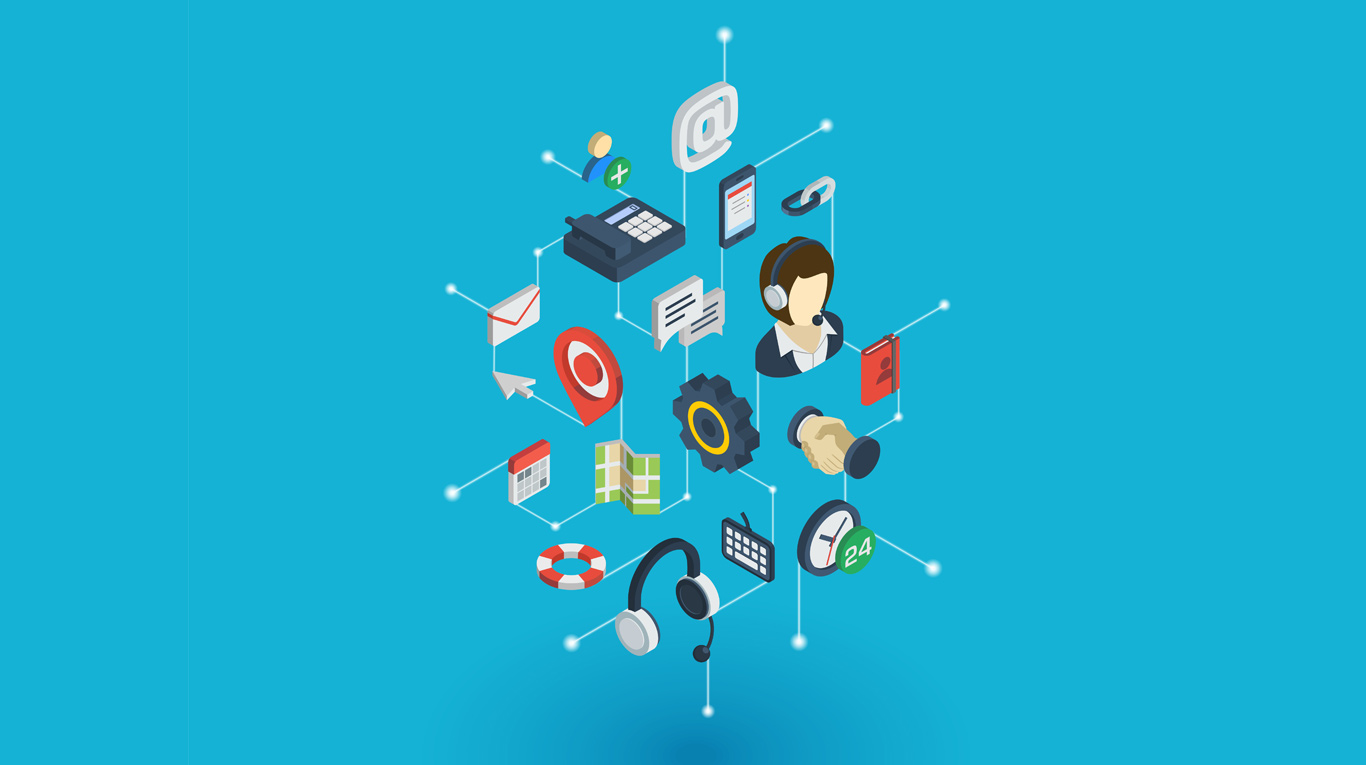
Contact Center as a Service – What is it and how can it benefit your business?
Customer is king and in today’s cutthroat and unpredictable marketplace keeping your customers happy and loyal is vital for running a successful business.
The first call, the first mail, the first comment on social media – whenever customers want to communicate, a business Contact Center is the first port of call. They are at the forefront of customer engagement and it goes without saying that, this part of any organization must be staffed and operated with utmost care.
Organizations are, of course, fully aware of the importance of running a good contact center and are now turning to new technologies to reduce negative customer care situations. One of the most popular and cost effective methods to streamline and automate the process is by opting for CCaaS – Contact Center as a Service.
What is Contact Center as a Service?
A completely novel way of using the best and the latest technology to provide world class customer engagement from your contact center. CCaaS provides
Cloud-based contact center solutions that allow businesses to deliver outstanding customer experiences via any medium.
These days it is fairly common for customers to approach organizations from a multitude of channels – while voice calls remain the most popular method of communications; companies need to keep all the other channels – email, social media, text etc – open and manned to provide a truly comprehensive and differentiated customer service.
With CCaaS, businesses can purchase and integrate the latest contact center technology with their existing systems (or set up a new contact center from scratch). CCaaS leverages the power of the cloud to offer a complete solution that includes services such as automatic call distribution, dialer, logger, multimedia or omni channel capability, all of which can be ramped up or down on demand.
How can businesses benefit from CCaaS
Whether your business is setting up a new contact center or refreshing the existing contact center technology, the advantages of opting for a CCaaS package are too numerous to ignore.
Costs – the cost benefits of using CCaaS is obvious right from the start. Business no longer needs to invest in infrastructure – delivered via the cloud, Contact Center as a service does away with the need to invest in routers, servers, and similar infrastructure. The easy pay-per-use model makes it even more attractive as it allows companies to pick and choose the pricing that works for their budget and requirements.
Flexibility – as-a-service model allows for dynamic scalability. With CCaaS companies can add agents or deal with sudden workload spikes instantly. CCaaS allows almost instantaneous ramping up or down of resources to match the client’s needs.
Analytics – organizations can access real-time monitoring and detailed reports of every part of the contact center. These insights are critical for understanding the gaps in service and productivity of agents, providing a foundation for enacting key changes.
Better Customer Experience – the CCaaS technology enables organizations to serve their customers better – multi-channel coverage allows for a more engaged customer outreach, intelligent caller profiling allows for quick resolution of the problem and real-time supervision of agents and calls can improve the quality of the interaction.
We are living in the times of soaring choices and hyper-informed consumers. To retain customers and ensure brand loyalty business must provide an out of the world customer experience.
Customers, nowadays, expect to be able to interact with organizations, when they want, how they want and with consistency in their service response and the only way to manage this complex communication scenario is by bringing in the latest technology.

Transform the corporate workplace with Managed WLAN
When it comes to Internet connectivity in an organization, user expectations are sky high! Employees and guests, alike, expect fast, secure and highly available WLAN services the moment they step into office premises. To match this growing demand, several organizations have opted for subscription based Managed WLAN services.
Apart from easing business operations and enriching the corporate work culture, Managed WLAN services contribute directly to business productivity and profitability. To better illustrate the scope and benefits of an outsourced cloud based Wi-Fi setup we look at how an ITES enterprise can be transformed by managed WLAN services.
Challenges and Needs
In a large global company with thousands of employees spread across various regional offices in India, WLAN systems are complex projects that require dedicated management and support.
For an enterprise spanning vast geographies, the challenge is to provide secure and reliable Wi-Fi Internet access to users in all the regional office across the country. The enterprise would also require dependable connectivity at a desired bandwidth to ensure a certain speed for executing business critical functions.
What does a managed WLAN service provider bring to the table?
Managed WLAN services is so much more than providing access and managing corporate users, it’s a 360° process that starts right from the design phase – a team of Network experts study the organizational layout and its bandwidth requirements and design a WLAN plan based on their analysis.
The technology partner will then start the engineering and installation process. This includes –
- Installing an Internet link of required bandwidth, based on the number of users expected to access the Internet.
- Deployment of Wireless Access Points at all corporate branches, including cabling and PoE injectors/ switches.
- Configuration of wireless SSIDs.
- Building a customized corporate homepage with access control through user login.
Once the WLAN system is in place, the solution provider takes over the daily management and monitoring of the Wi-Fi ecosystem. This takes the form of –
- A cloud based centralized WLAN monitoring console to observe the network and detect, prevent and mitigate wireless attacks. The client is also able to gain 360° network visibility and user–level and application-level control.
- A centralized authentication system to provide network access based on users, devices type and location.
- A guest management portal to provide access to guests and temporary users.
How does Managed WLAN transform the corporate workplace?
After implementing a managed WLAN solution, the first and the most perceptible benefit is seamless and smooth connectivity for all users. Employees and guests alike can now bank on reliable wireless connectivity that can be accessed easily.
A managed WLAN service also frees up the core IT personnel from the daily operations of network management, giving them time to focus on areas of strategic business importance.
The network managers are also given complete network visibility and control. Along with being able to easily control the bandwidth and access, the managers are provided metrics and reports on Internet usage among employees or guests and performance and usage of applications.
In conclusion
From large global organization to SMEs, the rise of mobile usage and BYOD culture has changed the significance of Internet connectivity in a corporate setup. To provide secure, scalable and seamless Internet access, professional solution providers must be brought into the picture. The increase in productivity and efficiency that a fully managed WLAN system brings to an organization equals a positive Return on Investment.
For more than a decade, Sify has been successfully building and managing complex networks ecosystems across the globe. From commissioning the world’s largest MPLS network to leveraging cloud platforms for enhancing connectivity – Sify has the deep domain knowledge across the entire length and breadth of the network landscape. This experience gives us an in-depth understanding of what enterprises require from their networks and how they use them.

5 Key Benefits of a Fully Managed Wi-Fi Solution
The rapid rise of new disruptive technology trends – cloud, social media and mobility –has added a new dimension to business operations. Connectivity is now the most critical factor for running a competitive business.
To get an enterprise-grade WLAN service for 100% secure and seamless connectivity, businesses need to outsource their WLAN design, installation and management to a professional technology partner. A fully managed Wi-Fi solution provides fast, easily accessible and secure wireless connectivity across the organization on a flexible subscription based payment models.
Here are the 5 key benefits of Managed Wi-Fi
Ease of Business
The first and the most noticeable benefit of outsourcing WLAN management is the hassle-free access to connectivity. The IT team no longer needs to deal with the stress of network downtime and constant demands for accessibility from users spread across the company.
The entire WLAN ecosystem is managed by the technology partner, who takes care of all the Wi-Fi requirements of the company – from analyzing enterprise requirements, designing and installing a customized WLAN system to day-to-day management and operations of the system.
Dynamic scalability
Managed WLAN services have the added advantage of being highly scalable. Organizations can rely on rapid provisioning and deployment of additional WLAN nodes to match sudden workload spikes.
Highly secure
Making your network open and accessible to a vast number of users and devices can lead to serious security gaps. A managed WLAN service offers a layered security structure – centralized authentication infrastructure to control access to the network, automatic tracking of all users and devices and wireless intrusion detection, prevention and mitigation.
Complete visibility
With a fully managed wireless network, companies gain an unprecedented level of visibility and control over the entire network. A cloud based centralized WLAN monitoring dashboard provides deep visibility of the entire WLAN infrastructure and provides application-level and user level control. Managers can control Wi-Fi usage by app category and make quick decisions with weekly or monthly reports.
Enhanced user experience
Outsourced wireless systems provide completely smooth and seamless connectivity for all users – from the employees to guests and visitors. Employees can now expect to walk into their office building and link instantaneously with the enterprise WLAN and guests are provided easy access within minutes – without compromising on security!
The last few years have seen the corporate work culture changing drastically. Employees no longer sit for hours in front of their desktops; mobile devices and laptops allow people to move freely and work from anywhere in the building. This dynamic work culture is perfect for enhancing teamwork and nurturing innovation and an enhanced WLAN ecosystem is an essential component of this new work environment.
For more than a decade, Sify has been successfully building and managing complex networks ecosystems across the globe. From commissioning the world’s largest MPLS network to leveraging cloud platforms for enhancing connectivity – Sify has the deep domain knowledge across the entire length and breadth of the network landscape. This experience gives us an in-depth understanding of what enterprises require from their networks and how they use them.

How to get your Business ERP GST ready?
On July 1st, 2017, Indian businesses will enter a new economic era. The GST bill, India’s biggest tax reform since independence, will unify and simplify India’s complex tax system to bring transparency and reduce tax evasion and corruption.
While the new tax regime will have several benefits for businesses in the long run, the change over to GST compliant systems is keeping managers awake night after night.
ERP systems, in many organizations, are the foundation on which business applications are operated; the critical and non-critical functions of most departments are run on these applications. Hence the GST compliance of ERP systems is crucial and MUST be planned and implemented to meet the July 1st deadline.
Some key ERP areas impacted by the GST bill
Business process changes
The GST bill is bound to affect several departments and business processes; first and foremost, all tax related procedures will need to be aligned to GST rules. Some other processes that will need significant revisions are sales order, billing document, purchase order, goods receipt, vendor invoice, stock transfer and subcontracting.
Master data revision
The new GST requirements will need to be incorporated in the master data; changes to various master data, such as chart of accounts, vendor master, customer masters, etc will need to be made. Companies will be required to maintain a GST registration number for each registered customer and vendor.
Document numbering
Unique sequential numbering for outgoing GST invoices must be maintained.
GSTIN Registration
Companies will be required to register and obtain a GST identification number (GSTIN). The GSTIN will subsume the existing excise registration, service tax registration, and VAT registration.
The GSTIN registration number will suffice for all three types of GST taxes – CGST, SGST & IGST, however companies must have individual registration for each state.
Tax Procedures
Tax procedures will need to be changed completely to accommodate the new GST structure. Some specific GST based changes are – mandatory monthly tax returns, GST tax accounts to define CGST, SGST & IGST separately for both MM & SD, migration from TAXINJ to TAXINN for SAP ERP systems, input tax credit and opening of a Tax Register for reporting information such as inward and outward supplies.
Open transactions
There are bound to be several partially open transactions, which must be closed, reversed or migrated to the new system. In some cases, temporary provisions must be made to manage transactions that spillover after the GST rollout such as returns of goods sold or purchased before GST and returned after GST implementation, goods in transit during cutover activities, etc.
Upgrades and Patches
The ERP system must be evaluated to understand the need for upgrades or patches for GST compliance.
While companies like SAP are providing GST related support and software patches, it is up to each organization to define how its business processes and functions will adapt to the challenges thrown up by the GST rollout. The simplification of the tax structure and the monetary benefits of GST open new opportunities for businesses, but the first step to unlocking these benefits, is to be GST ready on July 1st.
Sify being a leading integrated ICT player in India and with services that cut across Data Center, Cloud, Network and Application and Technology Integration, we are uniquely placed to offer enterprises comprehensive IT services tailored to accelerate their growth.
When it comes to upgrading, migrating or changing your mission critical SAP environment to meet external changes – such as the GST bill implementation – our comprehensive SAP services suite backed by our expert SAP consultants and engineers and strong infrastructure DNA, ensures that your SAP environment complies seamlessly with the new regime.
We provide a one-stop shop for all SAP solutions to take care of your GST related SAP compliance challenges.

What is Managed Wi-Fi and why do you need it?
The days of spotty connectivity and Internet cables are far behind us; these days’ people expect instant connectivity – everywhere and all the time. And when it comes to a business setting, quick and easily accessible Wi-Fi connectivity is not just about ease of business, it has tangible benefits such as enhanced productivity, efficiency and teamwork.
In the past decade, the business WLAN scenario has changed completely; from managing a few access points (AP) to provide wireless hotspots for a small number of employees, office Wi-Fi is now expected to provide complete enterprise-wide coverage to hundreds and thousands of users.
Managed WLAN defined
To manage this new scale of wireless connectivity demand and to ensure that scores of employees, guests and users are provided instant and secure connectivity, enterprises need to rope in professional service providers to manage their Wireless LAN.
Cloud based Wi-Fi services is the way forward; the entire WLAN ecosystem is managed remotely by the service provider ensuring a secure, scalable and stress free Wi-Fi network.
A managed WLAN solution is more than just managing user access, it can comprise the entire lifecycle of WLAN – from designing, engineering and installing the wireless systems to managing the entire network. Cloud managed Wi-Fi uses a flexible subscription based payment model to deliver centralized management for authentication of users and network monitoring.
Why do businesses NEED to consider Managed WLAN services?
The massive upsurge in the use of smart mobile devices (currently there are over 2 billion smartphones worldwide) and the rise of BYOD (bring your own device) culture has resulted in a corresponding increase in the demand for connectivity. Wi-Fi Networks are now required to provide safe and fast connectivity to a growing number of diverse devices.
Add to this, the huge growth in Internet usage with social media and other web-based applications. Employees require more than just email access and expect high speed connectivity to be present always and on any device.
Gone are the days of providing a few wireless hot spots in the office, WLAN now needs to manage thousands of users, using a variety of devices, and deliver enterprise grade Internet connectivity to a multitude of business sites. The magnitude of Wi-Fi management is enough to tie up valuable in-house IT personnel daily. Outsourcing to a managed WLAN service provider removes the burden of the day-to-day WLAN operations and frees up the core IT team to concentrate on other business critical issues.
Whether you have a small office or a large enterprise spread over multiple locations, connectivity is critical for running a competitive business. A well-managed wireless ecosystem allows employees the freedom to move away from their desktops and to be flexible with their work environment; this, in turn, creates and fosters a more productive work culture.
For more than a decade, Sify has been successfully building and managing complex networks ecosystems across the globe. From commissioning the world’s largest MPLS network to leveraging cloud platforms for enhancing connectivity – Sify has the deep domain knowledge across the entire length and breadth of the network landscape. This experience gives us an in-depth understanding of what enterprises require from their networks and how they use them.