


Sify Technologies
Admin
How Data Center works (and how they’re changing)
A Data Center is usually a physical location in which enterprises store their data as well as other applications crucial to the functioning of their organization. Most often these Data Centers store a majority of the IT equipment – this includes routers, servers, networking switches, storage subsystems, firewalls, and any extraneous equipment which is employed. A Data Center typically also includes appropriate infrastructure which facilitates storage of this order; this often includes electrical switching, backup generators, ventilation and other cooling systems, uninterruptible power supplies, and more. This obviously translates into a physical space in which these provisions can be stored and which is also sufficiently secure.
But while Data Centers are often thought of as occupying only one physical location, in reality they can also be dispersed over several physical locations or be based on a cloud hosting service, in which case their physical location becomes all but negligible. Data Centers too, much like any technology, are going through constant innovation and development. As a result of this, there is no one rigid definition of what a Data Center is, no all-encompassing way to imagine what they are in theory and what they should look like on the ground.
A lot of businesses these days operate from multiple locations at the same time or have remote operations set up. To meet the needs of these businesses, their Data Centers will have to grow and learn with them – the reliance is not so much on physical locations anymore as it is on remotely accessible servers and cloud-based networks. Because the businesses themselves are distributed and ever-changing, the need of the hour is for Data Centers to be the same: scalable as well as open to movement.
And so, new key technologies are being developed to make sure that Data Centers can cater to the requirements of a digital enterprise. These technologies include –
- Public Clouds
- Hyper converged infrastructure
- GPU Computing
- Micro segmentation
- Non-volatile memory express
Public Clouds
Businesses have always had the option of building a Data Center of their own, to do which they could either use a managed service partner or a hosting vendor. While this shifted the ownership as well as the economic burden of running a Data Center entirely, it couldn’t have as much of a drastic effect to due to the time it took to manage these processes. With the rise of cloud-based Data Centers, businesses now have the option of having a virtual Data Center in the cloud without the waiting time or the inconvenience of having to physically reach a location.
Hyper converged infrastructure
What hyper converged infrastructure (HCI) does is simple: it takes out the effort involved in deploying appliances. Impressively, it does so without disrupting the already ongoing processes, beginning from the level of the servers, all the way to IT operations. This appliance provided by HCI is easy to deploy and is based on commodity hardware which can scale simply by adding more nodes. While early uses that HCI found revolved around desktop virtualization, recently it has grown to being helpful in other business applications involving databases as well as unified communications.
GPU Computing
While most computing has so far been done using Central Processing Units (CPUs), the expansive fields of machine learning and IoT have placed a new responsibility on Graphics Processing Units (GPUs). GPUs were originally used only to play graphics-intensive games, but are now being used for other purposes as well. They operate fundamentally differently from CPUs as they can process several different threads in tandem, and this makes them ideal for a new generation of Data Centers.
Micro segmentation
Micro segmentation is a method through which secure zones are created in a Data Center, curtailing any problems which may arise through any intrusive traffic which bypasses firewalls or. It is done primarily through and in software, so it doesn’t take long to implement. This happens because all the resources in one place can be isolated from each other in such a way that if a breach does happen, the damage is immediately mitigated. Micro segmentation is typically done in software, making it very agile.
Non-volatile memory express
The breakneck speed at which everything is getting digitized these days is a definitive indication that data needs to move faster as well! While older storage protocols like Advanced Technology Attachment (ATA) and the small computer system interface (SCSI) have been been impacting technology since time immemorial, a new technology called Non-volatile memory express (NVMe) is threatening their presence. As a storage protocol, NVMe can accelerate the rate at which information is transferred between solid state drives and any corresponding systems. In doing so, they greatly improve data transfer rates.
The future is here!
It is no secret that Data Centers are an essential part of the success of all businesses, regardless of their size or their industry. And this is only going to play a more and more important factor as time progresses. A radical technological shift is currently underway: it is bound to change the way a Data Center is conceptualized as well as actualized. What remains to be seen is which of these technologies will take center stage in the years to come.
Reliable and affordable connectivity to leverage your Data Center and Cloud investments
To know more about Sify’s Hyper Cloud Connected Data Centers – a Cloud Cover connects 45 Data Centers, 6 belonging to Sify and 39 other Data Centers, on a high-speed network…

Is your network infrastructure built for the future? Check today!
Any network infrastructure forms a section of a much larger IT infrastructure of any organization. Typically, a network infrastructure is likely to contain the following:
- Networking devices: such as LAN Cards, modems, cables, and routers
- Networking software: such as firewalls, device drivers, and security applications
- Networking services: such as DSL, satellite, and wireless services.
The continuous improvements in the technologies underlying the network infrastructure have made sure that as a business owner, you keep your network infrastructure up to date with the latest trends. It is easy to see why network infrastructure plays such an important role in enterprise management and functioning. Big businesses must keep thousands of devices connected to maintain consistency across the whole enterprise. Having a strong backbone helps. This is where a good network infrastructure comes in.
Considering the innovations and advancements in this sector, let’s look at some of the important trends which will help you find out if your infrastructure is up-to-date, and if not, where work is required:
Cloud networking systems
First and foremost, the reliance of businesses with cloud systems is increasing over the years. So, to start with, you should make sure that you are using a cloud-based system for your network infrastructure. With both public and private cloud options available, big enterprises are looking to shift their operations onto the cloud for fast, reliable, and secure operations. Hybrid clouds, which mix the good bits of both public and private cloud networking systems, have also emerged as viable network infrastructure solutions for enterprises.
Security as the topmost priority
Enterprises are giving utmost importance to security, owing to the fact that data breaches and hacks have been on the rise. With new innovations in tech come new ways of hacking networks. To protect against these breaches, organizations are now beyond the traditional firewalls and security software, and are turning up the heat on any malicious hacker looking to take down their network. Security has now become by far the biggest motivator in improving network security these days.
A secure network infrastructure requires you to have properly configured routers that can help protect against a DDoS (Distributed Denial of Service) attack. Further, a keen eye must be kept on the Operating systems as they form the foundation to any layered security. If privileges within an OS are jeopardized, the network security can be compromised at large.
An increased importance to analytics
For a long time, network analytics tools have been pulling data from the network, but it seems that the tides are changing. Enterprises now use their own big data analytics tools to generate information on trends and are pushing data from the network infrastructure. Companies like Cisco and Juniper are providing telemetry from their networking infrastructure to local analytics systems, with Juniper using OpenNTI to analyze it. Is your network infrastructure in-sync with your data analytics tools? If no – you must consider doing that, you don’t want to be left behind while the world progresses.
SD-WAN
Software-defined wide area networks continue to be a hot trend in network infrastructure innovations. Although the concept of SDN hasn’t been as successful as first imagined, SD-WAN seems to be the exception to the rule. Perhaps it is the only good thing that’s come out of the SDN concept. SD-WAN is gaining wide acceptance due to the fact that it offers good riddance from complex routing policies, and allows us to go beyond the capabilities of normal routing policies. There are numerous vendors offering SD-WAN models for your infrastructure, and the cost for it varies from vendor to vendor. Ease of use is what drives enterprises towards SD-WAN.
If an enterprise incorporates the above-discussed network trends, it is likely that the Infrastructure is not only ready for today, but is also future-proof. To make sure your network infrastructure is always up-to-date, you need to keep up with the latest news, innovations, and trend changes in networking.
Here’s why your enterprise should have a disaster recovery system
Disaster can strike anytime. Whether they are natural or inflicted by man, disasters have small chances of being predicted accurately. Whatever be the case, enduring and recovering from these disasters can be a pretty rough job for your enterprise.
Disasters can potentially wipe out the entire company, with the enterprise’s data, employees, and infrastructure all at risk. From small equipment failure to cyber-attacks, recovery from disasters depends upon the nature of the events themselves. Disaster recovery is an area of security management and planning that aims to protect the company’s assets from the aftermath of negative events. While it is incredibly tough to completely recover from disasters within a short span of time, it is certainly advisable to have disaster recovery systems in place. In the time of need, these DR plans can present an effective, if not quick, method of recovery from negative events.
The importance of a Disaster Recovery System
Prevention is better than cure, but sometimes, we must make do with the latter. We cannot prevent every attack that can potentially cripple our enterprise, but we must make sure that we have the resources to recover. The need for disaster recovery systems can arise from various situations, some being discussed below.
- The unpredictability of nature
It is estimated that about 4 out of every 5 companies, which experience interruptions in operations of 5 days or more, go out of business. The wrath of Mother Nature is certainly a contributing factor to this statistic. One can seldom predict when Mother Nature is about to strike. Earthquakes, tsunamis, tornadoes and hurricanes can cause irreparable damage to enterprises and businesses. Stopping these disasters is impossible; however, not having a disaster recovery plan in place is inexcusable. We cannot predict how much damage nature can cause to our company; hence, it is of prime importance that a disaster recovery system be in place to prevent your enterprise from falling prey to the aforementioned statistic.
- Technology failures can occur anytime
These days, customers want access to data and services every second of the day, every day of the year. Due to the immense pressure on your enterprise systems, it is possible that they may crumble. Machine and hardware failure can seldom be predicted, but it is certainly possible to resume normal work with minimum disruption and slowdown. The only way to do this is either by eliminating single failure points from your network, which can be extremely expensive, or by having suitable recovery systems in place. Having recovery plans, in hindsight, are perhaps the best bet for you to keep your enterprise going at full speed.
- Human error
“Perfection is not attainable, but if we chase perfection we can catch excellence.”
Humans aren’t perfect, and are bound to make mistakes. The nature of these mistakes cannot be predicted. In order to survive all these unpredictable phases, you need to have an effective disaster recovery plan in place.
Enough about the reasons behind backup plans.
Let’s look at what a good disaster recovery system should include.
Your disaster recovery system must include…
Each and everything that could potentially save you from having to start up your enterprise from scratch. Methods to recover from every potential interruption, from technical to natural, should be there in your DRP. These include analyses of all threats, data backup facilities, employee and customer protection, among other essential things.
With each passing day, you must also consider any additions or updates to your DR systems. Technology is improving day by day, and it is possible that what you’re currently trying to achieve may be made easier and quicker by the use of newer tech. Also identifying what’s most important, and where to innovate, is a crucial aspect of DR planning.
In order to ensure that your DR system is running at full speed, your enterprise can hold mock disaster recovery drills. This will help identify weak points in the system, and make people accustomed to the processes involved. It will make reacting to the actual disaster much more efficient and quick.
DRaaS
Disaster Recovery as a service has made it easier for enterprises to have disaster recovery systems ready. Various providers have reduced the load on entrepreneurs when it comes to preparing for disasters, by offering them custom made effective disaster recovery systems. Perhaps the most important thing one should do now is not wait. If your enterprise has a disaster recovery system in place, thoroughly test it for bottlenecks, if it doesn’t, well, get one!
Ensure business continuity with Sify’s disaster recovery as a service.
To know more about GoInfinit Recover
– Sify’s disaster recovery solution with no change to your IT setup…

How Cloud Data Centers Differ from Traditional Data Centers
Every organization requires a Data Center, irrespective of their size or industry. A Data Center is traditionally a physical facility which companies use to store their information as well as other applications which are integral to their functioning. And while a Data Center is thought to be one thing, in reality, it is often composed of technical equipment depending on what requires to be stored – it can range from routers and security devices to storage systems and application delivery controllers. To keep all the hardware and software updated and running, a Data Center also requires a significant amount of infrastructure. These facilities can include ventilation and cooling systems, uninterruptible power supplies, backup generators, and more.
A cloud Data Center is significantly different from a traditional Data Center; there is nothing similar between these two computing systems other than the fact that they both store data. A cloud Data Center is not physically located in a particular organization’s office – it’s all online! When your data is stored on cloud servers, it automatically gets fragmented and duplicated across various locations for secure storage. In case there are any failures, your cloud services provider will make sure that there is a backup of your backup as well!
So how do these different modes of storage stack up against each other? Let’s compare them across four different metrics: Cost, Accessibility, Security and Scalability.
Cost
With a traditional Data Center, you will have to make various purchases, including the server hardware and the networking hardware. Not only is this a disadvantage in itself, you will also have to replace this hardware as it ages and gets outdated. Moreover, in addition to the cost of purchasing equipment, you will also need to hire staff to oversee its operations.
When you host your data on cloud servers, you are essentially using someone else’s hardware and infrastructure, so it saves up a lot of financial resources which might have been used up while setting up a traditional Data Center. In addition, it takes care of various miscellaneous factors relating to maintenance, thus helping you optimize your resources better.
Accessibility
A traditional Data Center allows you flexibility in terms of the equipment you choose, so you know exactly what software and hardware you are using. This facilitates later customizations since there is nobody else in the equation and you can make changes as you require.
With cloud hosting, accessibility may become an issue. If at any point you don’t have an Internet connection, then your remote data will become inaccessible, which might be a problem for some. However, realistically speaking, such instances of no Internet connectivity may be very few and far between, so this aspect shouldn’t be too much of a problem. Moreover, you might have to contact your cloud services provider if there’s a problem at the backend – but this too shouldn’t take very long to get resolved.
Security
Traditional Data Centers have to be protected the traditional way: you will have to hire security staff to ensure that your data is safe. An advantage here is that you will have total control over your data and equipment, which makes it safer to an extent. Only trusted people will be able to access your system.
Cloud hosting can, at least in theory, be more risky – because anyone with an internet connection can hack into your data. In reality, however, most cloud service providers leave no stone unturned to ensure the safety of your data. They employ experienced staff members to ascertain that all the required security measures are in place so that your data is always in safe hands.
Scalability
Building your own infrastructure from scratch takes a lot of input in both financial as well as human terms. Among other things, you will have to oversee your own maintenance as well as administration, and for this reason it takes a long time to get off the ground. Setting up a traditional Data Center is a costly affair. Further, If you wish to scale up your Data Center, you might need to shell out extra money, albeit unwillingly.
With cloud hosting, however, there are no upfront costs in terms of purchasing equipment, and this leads to savings which can later be used to scale up. Cloud service providers have many flexible plans to suit your requirements, and you can buy more storage as and when you are ready for it. You can also reduce the amount of storage you have, if that’s your requirement.
Can’t decide which one to go for?
There is no universal right choice. Your choice should depend on what your business is prepared to take on, what your exact budget is, and whether or not you have an IT staff available to handle a physical Data Center.
Consider a dedicated private cloud infrastructure services for your mission-critical workloads
To know more about GoInfinit Private
– Sify’s private cloud storage service that will be ready for application deployment in as little as 10 weeks…
Sify powers 650 branches of India Post Payments Bank (IPPB) as Network Integrator & Network Service Provider of DoP (Department of Post)
Honorable Prime Minister Shri Narendra Modi launched IPPB nationwide today
Chennai, September 1, 2018 — Sify Technologies Limited (NASDAQ: SIFY), India’s ICT Solutions and Services leader, is proud to record a momentous occasion when 650 branches of India Post Payments Bank (IPPB) and 3250 access points were dedicated to the nation by the Honorable Prime Minister Shri Narendra Modi in a ceremony held today in New Delhi. Sify is the Network Integrator and Network Service Provider that enabled this ambitious pan-India project.
As part of the INR 1877.20 Cr (USD 270 Mil) DoP modernization/IT automation drive, Sify was mandated to build and connect endpoints, spanning both sorting and administration offices. This resulted in Sify building the largest integrated MPLS (Multiprotocol Label Switching) network in India for the postal services. The total scale of the project in Phase 1 involved connecting 28,000+ urban & Semi urban post offices.
Resting on Sify’s MPLS network backbone, IPPB will go now live with 650 branches, 3250 access points co-located at post offices and around 11,000 gramin dak sevaks and postmen providing doorstep banking services. IPPB is starting operations with 17 crore accounts and gradually 1.55 lakh access points in the country will be enabled to offer banking services.
Speaking on the occasion, Kamal Nath, CEO, Sify Technologies, said, “A proud moment for us and a coming-of-age project for Sify that firmly established us as India’s most comprehensive ICT Solutions and Services player. This was not just about bringing banking to millions of under-banked Indians. It was about giving them the same opportunity as everybody else; a crucial enabler of the Prime Minister’s vision for Digital India. We are immensely proud that, as a pioneer of Network and Data connectivity in India, we played a crucial role in this financial inclusion revolution.”
About Sify Technologies
Sify is the largest ICT service provider, systems integrator, and all-in-one network solutions company on the Indian subcontinent. We have also expanded to the United States, with headquarters in the heart of California’s Silicon Valley.
Over 8500 businesses have become Sify customers. We also partner with other major network operators to deliver global network solutions. Our customers can access Sify services via India’s largest MPLS network. Among the very few Enterprise class players in India, Sify, today has presence in more than 1600 cities in India and in North America, the United Kingdom and Singapore.
Sify, www.sify.com, Sify Technologies and www.sifytechnologies.com are registered trademarks of Sify Technologies Limited.
Forward Looking Statements
This press release contains forward-looking statements within the meaning of Section 27A of the Securities Act of 1933, as amended, and Section 21E of the Securities Exchange Act of 1934, as amended. The forward-looking statements contained herein are subject to risks and uncertainties that could cause actual results to differ materially from those reflected in the forward-looking statements. Sify undertakes no duty to update any forward-looking statements.
For a discussion of the risks associated with Sify’s business, please see the discussion under the caption “Risk Factors” in the company’s Annual Report on Form 20-F for the year ended March 31, 2018, which has been filed with the United States Securities and Exchange Commission and is available by accessing the database maintained by the SEC at www.sec.gov, and Sify’s other reports filed with the SEC.
For further information, please contact:
Sify Technologies Limited
Mr. Praveen Krishna
Investor Relations & Public Relations
+91 44 22540777 (ext.2055)
Sify and Cisco unveil ‘Software Defined WAN’ for Indian Enterprises
INDIA, AUGUST 13, 2018– Sify Technologies Limited (NASDAQ: SIFY), an ICT Solutions and Services leader in India, and Cisco Systems, Inc. (NASDAQ: CSCO), today announced the launch of their Managed and Secure Software-defined Wide Area Network (SD WAN) service, built on the Cisco SD-WAN platform.
Sify’s managed SD-WAN service will be the key driver for delivering a “Hybrid WAN for companies adopting Hybrid IT” in the Indian market. Sify’s SD WAN is offered as a managed service built on robust technology, giving customers the flexibility to smoothly transition from their existing network to a fully functional and secure SD WAN platform with minimal disruption, thereby giving enterprises the benefits of agility, flexibility, application-centricity and predictable network performance.
Elaborating on the partnership, Kamal Nath, CEO, Sify Technologies said, “Our software-defined Network services is an important part of our comprehensive go-to-market strategy as an enabler to Cloud adoption and underpins our Cloud@Core vision. As customers continue to move critical workloads to both the Public and Hybrid cloud, SD WAN becomes a critical part of the network strategy for them. This partnership with CISCO gives Sify the best-in-class technology to support its services strategy to help accelerate digital transformation services for Enterprises in India.”
Sanjay Kaul, Managing Director, Service Provider Business, Cisco India & SAARC said, “The network is the most critical element in an organization’s digital transformation journey. We are excited to partner with Sify Technologies to drive their Cloud business through Cisco SD-WAN to offer a flexible, highly secure and reliable service to its enterprise customers. Cisco SD-WAN can be deployed over any type of connection, and helps commission new services across hybrid networks and can reduce costs by nearly 70% over a five-year horizon. It also provides secure connections to applications as multilayer security encrypts all data from the WAN edge to the cloud.”
Sify’s Managed SD Wan service is now available for enterprises in India to adopt. The service has been launched after successful trials with customers.
About Sify Technologies
Sify is the largest ICT service provider, systems integrator, and all-in-one network solutions company on the Indian subcontinent. We have also expanded to the United States, with headquarters in the heart of California’s Silicon Valley.
Over 8500 businesses have become Sify customers. We also partner with other major network operators to deliver global network solutions. Our customers can access Sify services via India’s largest MPLS network. Among the very few Enterprise class players in India, Sify, today has presence in more than 1550 cities in India and in North America, the United Kingdom, and Singapore.
Sify, www.sify.com, Sify Technologies and www.sifytechnologies.com are registered trademarks of Sify Technologies Limited.
Forward Looking Statements
This press release contains forward-looking statements within the meaning of Section 27A of the Securities Act of 1933, as amended, and Section 21E of the Securities Exchange Act of 1934, as amended. The forward-looking statements contained herein are subject to risks and uncertainties that could cause actual results to differ materially from those reflected in the forward-looking statements. Sify undertakes no duty to update any forward-looking statements.
For a discussion of the risks associated with Sify’s business, please see the discussion under the caption “Risk Factors” in the company’s Annual Report on Form 20-F for the year ended March 31, 2018, which has been filed with the United States Securities and Exchange Commission and is available by accessing the database maintained by the SEC at www.sec.gov, and Sify’s other reports filed with the SEC.
About Cisco
Cisco (NASDAQ: CSCO) is the worldwide technology leader that has been making the Internet work since 1984. Our people, products, and partners help society securely connect and seize tomorrow’s digital opportunity today. Discover more at newsroom.cisco.com and follow us on Twitter at @Cisco.
Cisco and the Cisco logo are trademarks or registered trademarks of Cisco and/or its affiliates in the U.S. and other countries. A listing of Cisco’s trademarks can be found at www.cisco.com/go/trademarks. Third-party trademarks mentioned are the property of their respective owners. The use of the word partner does not imply a partnership relationship between Cisco and any other company.
For further information, please contact:
Sify Technologies Limited
Praveen Krishna
Investor Relations & Public Relations
+91 44 22540777 (ext.2055)
praveen.krishna@sifycorp.com
CISCO
Taylor Hassman
Cisco, thassman@cisco.com
+1 415 610 6075
20:20 Media
Nikhila Kesavan
+91 9840124036
nikhila.kesavan@2020msl.com
Grayling Investor Relations
Shiwei Yin
+1-646-284-9474
Shiwei.Yin@grayling.com
Sify Technologies breaks into Top 50 in Fortune India’s “The Next 500” Ranking
A comprehensive industry ranking of India’s mid-sized companies
Chennai, August 1, 2018— Sify Technologies Limited (NASDAQ NM: SIFY), a leader in Managed Enterprise, Network, IT and Software services in India with global delivery capabilities, today announced that it has been ranked 39 in Fortune India’s “The Next 500” ranking, the first comprehensive ranking of India’s mid-size companies.
Sify was ranked 258 in 2015. The company’s aggressive growth over the last 3 years has catapulted it into the Top 50 this year.
Companies in The Next 500 are ranked on the basis of Revenue, Net Operating Income, Profit, Assets, Net Worth, Equity Dividend, and Employee Cost.
“This ranking is evidence of the multiple things we have done right over the years; focused solutions and services, on-time delivery of contracts, partnerships with the right technology leaders and disciplined financial outlook. Enroute to the INR 2000 crore milestone in FY 18, we built a unique ICT eco-system for India, moved up the value chain for clients from being service providers to Digital Technology Architects and achieved 20 sustained quarters of profitability. This ranking validates the company’s strategy to streamline its services as Network & Data Center Centric Services with Cloud@Core of everything we do. I congratulate every team member at Sify who has helped achieve this unique recognition,” said Mr. Raju Vegesna, Chairman, Sify Technologies.
About Sify Technologies
Sify is the largest ICT service provider, systems integrator, and all-in-one network solutions company on the Indian subcontinent. We’ve also expanded to the United States, with headquarters in the heart of California’s Silicon Valley.
Over 8500 businesses have become Sify customers. We also partner with other major network operators to deliver global network solutions. Our customers can access Sify services via India’s largest MPLS network. Among the very few Enterprise class player in India, Sify, today has presence in more than 1550 cities in India and in North America, the United Kingdom and Singapore.
Sify, www.sify.com, Sify Technologies and www.sifytechnologies.com are registered trademarks of Sify Technologies Limited.
Forward Looking Statements
This press release contains forward-looking statements within the meaning of Section 27A of the Securities Act of 1933, as amended, and Section 21E of the Securities Exchange Act of 1934, as amended. The forward-looking statements contained herein are subject to risks and uncertainties that could cause actual results to differ materially from those reflected in the forward-looking statements. Sify undertakes no duty to update any forward-looking statements.
For a discussion of the risks associated with Sify’s business, please see the discussion under the caption “Risk Factors” in the company’s Annual Report on Form 20-F for the year ended March 31, 2018, which has been filed with the United States Securities and Exchange Commission and is available by accessing the database maintained by the SEC at www.sec.gov, and Sify’s other reports filed with the SEC.
For further information, please contact:
Sify Technologies Limited
Mr. Praveen Krishna
Investor Relations & Public Relations
+91 44 22540777 (ext.2055)
praveen.krishna@sifycorp.com
20:20 Media
Nikhila Kesavan
+91 9840124036
nikhila.kesavan@2020msl.com
Grayling Investor Relations
Shiwei Yin
+1-646-284-9474
Shiwei.Yin@grayling.com
Sify Technologies to Deliver 400G-ready Metro Networks Using Ciena’s WaveLogic Ai Technology
Leading ICT Solutions and Services provider in India adds significant capacity and greater network intelligence
HANOVER, Md. and CHENNAI, India – June 28, 2018 – Sify Technologies Limited (NASDAQ: SIFY), an acknowledged ICT leader in the Indian Telecom and Data Center centric IT services space with global delivery capabilities, has selected Ciena’s (NYSE: CIEN) converged packet optical solutions to address rising customer demand and provide greater support for increasing data volumes, the Internet of Things (IoT), cloud-based services and Big Data analytics.
Sify can now scale its network capacity from 100G to 400G to deliver ultra-high, data-heavy bandwidth services and manage unpredictable traffic growth for its customers, which include Over the Top (OTT) providers, financial services institutions and healthcare organizations.
Key Facts:
Sify Technologies Limited is an information and communications technology provider (ICT) offering end-to-end solutions delivered over a telecom data network reaching more than 1,550 cities and towns in India.
With the growing adoption of both private and public clouds in India, bandwidth demand for connecting Data Centers and cloud providers is growing exponentially. Sify’s Data Center Interconnect and Cloud Interconnect offerings are designed to deliver the required bandwidth and performance characteristics for reliable and cost-effective solutions that power the cloud strategies of large enterprises in the financial services, media and digital verticals. Today, Sify’s Data Center Interconnect footprint covers more than 40 Data Centers in India. The Cloud Interconnect offering provides on-demand access to leading public cloud and SAAS providers in India. The Ciena deployment helps Sify scale its network on demand and provides the key network characteristics to support its customers’ requirements.
By leveraging Ciena’s Waveserver Ai and 6500 Packet-Optical Platforms powered by WaveLogic Ai coherent technology, Sify can program its network to adapt to changing service requirements in real-time while supporting large capacities in the metro networks.
Another key attribute of this deployment is Ciena’s advanced software capabilities, including PinPoint™ software that will allow Sify to address with precision any potential trouble spots, reducing the risk of outages and accelerating repair times from days to hours. Additionally, Ciena’s Blue Planet Manage, Control and Plan (MCP) software will give Sify real-time software control and improve network visibility.
Executive Comments:
“The elasticity of our network to support multi-cloud, multi-Data Center scenarios and its programmability to monitor, control and adapt to meet user demands in real-time is critical. Ciena’s understanding of our network infrastructure and their clarity in where and how we would benefit from integrating their solutions for more flexibility and scale in the network, especially in the context of Data Center/cloud driven east-west traffic, made them the right fit for our growth plans.”
Daniel Alex, President Telecom Business, Sify Technologies Limited
“As Sify Technologies supports more users, digital applications and connected things across India, they face the challenge of adapting to the demands being placed on their network. Ciena is committed to supporting Sify Technologies through its extensive experience and expertise, to deliver a more programmable infrastructure aided by software control and analytics to respond to changing network demands intuitively.”
Ryan Perera, Vice President and General Manager, Ciena India
About Sify Technologies
Sify Technologies Limited (NASDAQ NM: SIFY), is an acknowledged ICT leader in the Telecom and Data Center centric IT services space with global delivery capabilities. Among the very few Enterprise class players in India, Sify, today has presence in more than 1550 cities in India and offices in North America, United Kingdom and Singapore.
More than 8500 Enterprises access Sify’s IT services that’s focused on the Data Center and Cloud platform and connected through India’s largest MPLS network. As a truly converged ICT solutions and services provider, Sify is the preferred IT Services partner with a full suite of services ranging from Telecom connectivity services to Data Center transformation services along with Application and Security Services delivered on the same infrastructure.
Sify, Sify Technologies and www.sifytechnologies.com are registered trademarks of Sify Technologies Limited
About Ciena
Ciena (NYSE: CIEN) is a network strategy and technology company. We translate best-in-class technology into value through a high-touch, consultative business model – with a relentless drive to create exceptional experiences measured by outcomes. For updates on Ciena, follow us on Twitter @Ciena, LinkedIn, the Ciena Insights blog, or visit www.ciena.com.
Note to Ciena Investors
You are encouraged to review the Investors section of our website, where we routinely post press releases, SEC filings, recent news, financial results, and other announcements. From time to time we exclusively post material information to this website along with other disclosure channels that we use. This press release contains certain forward-looking statements that are based on our current expectations, forecasts, information and assumptions. These statements involve inherent risks and uncertainties. Actual results or outcomes may differ materially from those stated or implied, as a result of risks and uncertainties, including those detailed in our most recent annual or quarterly report filed with the SEC. Forward-looking statements include statements regarding our expectations, beliefs, intentions or strategies and can be identified by words such as “anticipate,” “believe,” “could,” “estimate,” “expect,” “intend,” “may,” “should,” “will,” and “would” or similar words. Ciena assumes no obligation to update the information included in this press release, whether as a result of new information, future events or otherwise.
For further information, please contact:
Sify Technologies Limited
Mr. Praveen Krishna
Investor Relations & Public Relations
+91 44 22540777 (ext.2055)

What Are the Trending Research Areas in Cloud Computing Security?
Cloud computing is one of the hottest trends. Most technological solutions are now on cloud and the ones remaining are vying to be on cloud. Due to its exceptional benefits, it has magnetized the IT leaders and entrepreneurs at all levels.
What is Cloud Computing?
Cloud Computing is when many computers are linked through a real-time communication network. It basically refers to a network of remote servers that are hosted in Data Center, which further can be accessed via internet from any browser. Hence, it becomes easy to store, manage, and process data as compared to a local server or personal computer.
What is Cloud Networking?
The access to the networking resources from a centralized third-party provider using Wide Area Network (WAN) is termed as Cloud Networking. It refers to a concept where the unified cloud resources are accessible for customers and clients. In this concept, not only the cloud resources but also the network can be shared. With Cloud Networking, several management functions ensure that there are lesser devices required to manage the network.
When data began to move to cloud, security became a major debate, but cloud networking and cloud computing security has come a long way with better IAM and other data protection procedures.
Cloud networking and cloud computing security revolves around three things-
- Safeguarding user accounts in the cloud
- Protecting the data in the cloud
- And, then the third aspect is application security.
Trending Research Areas in Cloud Computing Security
Following are the trending research areas in the Cloud Computing Security:
- Virtualization: Cloud computing itself is based on the concept of virtualization. In this process, virtual version of a server, network or storage is created, rather than the real one. Hardware virtualization refers to the virtual machines that can act like a computer with an operating system. Hardware virtualization is of two types: Full Virtualization and Para-Virtualization.
- Encryption: It is the process of protecting data by sending it in some other form. Cloud computing uses advanced encryption algorithms in order to maintain the privacy of your data. Crypto-shedding is another measure in which the keys are deleted when there is no requirement of using the data. There are two types of encryption used in cloud computing security including Fully Homomorphic Encryption and Searchable Encryption.
- Denial of Service: It is a type of attack in which an intruder can make the resources of the users unavailable by disrupting the services of the internet. The intruder makes sure that the system gets overloaded by sundry requests and also blocks the genuine incoming requests. Application layer attack and Distributed DoS attack are some of its types.
- DDoS Attacks: It stands for Distribution Denial of Service. It is a type of Denial of Service attack in which hostile traffic comes from various devices. Hence, it becomes difficult to differentiate between the malicious traffic and the genuine one. Application layer DDoS attack is another type of DDoS attack in which the attacker targets the application layer of the OSI model.
- Cloud Security Dimensions: Software called Cloud Access Security Brokers (CASB) in between the cloud applications and cloud users, monitors all the policies related to cloud security and also enforces the cloud security policies.
- Data Security: The Encryption method is used in protecting and maintaining the privacy of the data because security in the cloud-based services has always been the focal point. Due to some vulnerabilities and loopholes, data might get exposed to the public cloud.
- Data Separation: An important aspect of data separation is the geolocation. Organizations should make sure that the geolocation for data storage must be a trusted one. Geolocation and tenancy are the major factors in data separation.
Cloud is one of the topics with no limit at all. With its help, you can perform any kind of project in order to enhance the performance in speed and magnify the security algorithm so as to prevent the files from being hacked.
Sify allows enterprises to store and process data on a variety of Cloud options, making data-access mechanisms more efficient and reliable.
Data Center Interconnect: Details, Challenges & Solution
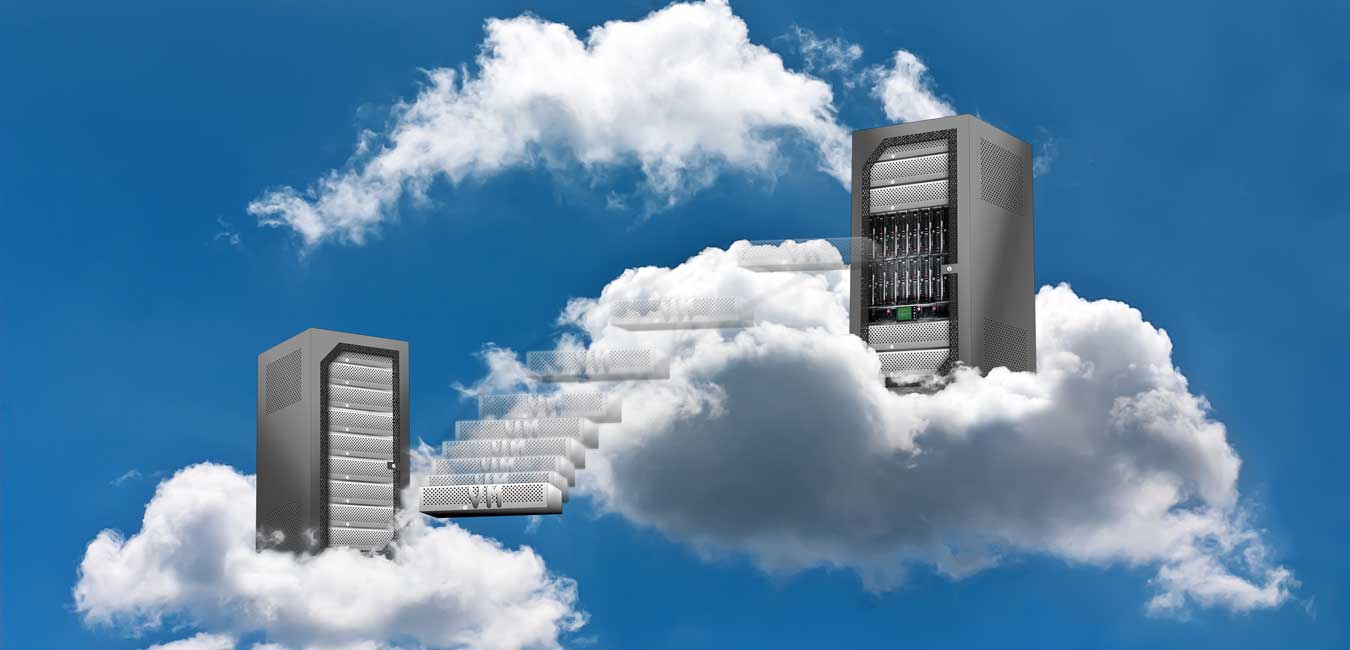
The ever-increasing demand for the Data-Center and network virtualization has its ramifications on the Data Center interconnect (check out Cloud Cover). It has gained the attention of the service provider’s network architecture making them think in the direction of load-sharing and distributed workloads. It has also become a way to connect various Data Centers in the cloud using SDN to allocate resources as per the requirement, automatically.
There was a time when Data Center interconnect (DCI) used to be simple. But due to the many technological advances and the availability of various options, there is a lot of confusion in the market. First, let’s take a look at the Data Center interconnect market:
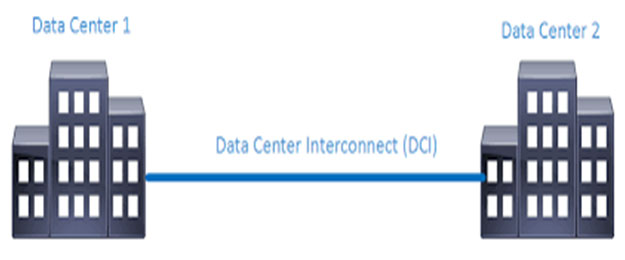
Intra-Connections-The intra Data Center interconnect refers to all the connections within the Data Center. They can be within one building, or between Data-Center buildings within the campus. The connections may be at a distance of meters to few kilometers.
Inter-Connections-These refer to the connections that are between the 10km-80km range. Undoubtedly, the connections may be far apart, but inter-Data Center connectivity market is focused within this range.
There are Data Centers situated to serve the entire continent and there are others focused in a specific metro area.
Case-Study (Online Retailer)
You are a global retailer, and you might have several thousand transactions running in a second. When the Data Center is far away, the data is more secure from the various natural disasters. But, then there is a challenge that comes with greater distance. The transactions that are in-flight may get lost due to latency.
So for online transactions, there is a local Data Center (primary Data-Center), and the other is a secondary Data Center that’s almost 80Km away. The benefits, in this case, are dual. First, your transactions will not be affected by the distance and the data is secure. Second, none of the transactions are lost due to latency. So in the worst case, only a small number of transactions might get affected or lost.
The traffic may be within Data-Centers, or between two Data-Centers for the load-balancing. Now the two important traffic categorization:
- East-West Traffic: The traffic between Data-Centers is referred as East-West.
- North-South: The traffic to the user is referred to North-South.
Which DCI Challenges Have To Be Overcome?
There are many challenges that have to be overcome. Let’s take a look at some of them.
Distance: The DCI applications vary greatly in size and scope in response to the Data Centers that may be dispersed across the globe or metro area or around a country. So it becomes critical to carry most of the bits farthest, but when the distance increases the latency increases as well. While choosing shortest route may minimize latency, bad equipment may also lead to latency.
Connection Capacity: The Data Centers store and deliver applications. The data sets that are coming in a Data-Center or leaving it may be very large. The range may vary from few hundred Gigabits to Terabits. To handle such large data, the equipment should offer reliable and high-capacity connections. It’ll make sure that they may quickly scale to address the spikes in traffic.
Data Security: Data Centers store a large amount of critical information. It demands that the Data Center connections are reliable, safe, and encrypted to avoid costly breaches and also data losses. While the security of stored data is crucial, what’s more, crucial is the security of in-flight data.
Automated Operations: As we know, manual operations may be labor-intensive, complicated, slow and may be error-prone as well. So it is very much imperative that complexity and lower speed of connection that arises out of manual operations may be minimized by moving towards automation. It shouldn’t take much time to establish a connection between Data-Centers and shouldn’t require on-going manual operations.
Rising Costs: When a large stream of data enters and leaves the Data-Center, it should be carried out in the most cost-efficient manner. If the Data Centers remain viable, the costs shouldn’t rise in the same way as the bandwidth. To take care of these issues, the solutions in high-speed networking should offer a solution that connects Data Centers at the lowest cost per bit.
Finally, Solution to Look Forward
Cloud cover is a solution that provides reliable and affordable connectivity to leverage your Data Center and cloud investments.
It offers
- 45 Data Centers with a high capacity fiber
- Zero latency access to AWS & Other CSPs
It is also carrier neutral with the presence of significant operators within the Data Center. The settlement comes at a low price that fits the budget of small to large scale businesses.
Our Cloud Cover connects 45 Data Centers, 6 belonging to Sify and 39 other Data Centers, on a high-speed network.