


Workplace learning usually sits in a system separate from the work. That separation, not the content or the learner, is why it goes unused.
We spend a lot of time inside enterprise L&D teams, and the same puzzle turns up almost everywhere. The work is good. The courses are solid, and the people who build them know their craft. Yet most of it goes unused. Employees say they want to develop, then never open the courses meant to help them.
When L&D leaders explain this to us, the first reason they give is time. Their people are stretched, and development slips behind whatever is due today. There’s truth in it — engaging people and getting them to apply what they learn is one of the field’s hardest challenges this year (L&D Global Sentiment Survey, 2026). But time doesn’t fully explain it. A capable employee who hits a wall on a task tends to solve it fast: a message to a colleague, a quick search, a question to an AI assistant. None of that runs through the learning platform. The learning still happens. It just happens somewhere other than the place built for it.
So the gap has little to do with effort or motivation. It comes down to location: where the learning lives, and how far that is from the work.
Engagement is really a location problem
That distance is the whole problem. Reaching a course in the LMS for example, means leaving the work behind: an employee has to stop, sign in to a separate system, search the catalog, work through a module, then find the way back to where they were. Every step adds friction, and none of it happens while the problem is still in front of them.
By the time they reach the course, the urgency that drove them is no longer there. The material was written months earlier for potentially a general audience, broad by design and never quite about the situation they’re in. Distance removes the two things that make learning useful: timing and relevance. So the people who most want to learn end up working around it.
Bring learning into the flow of work
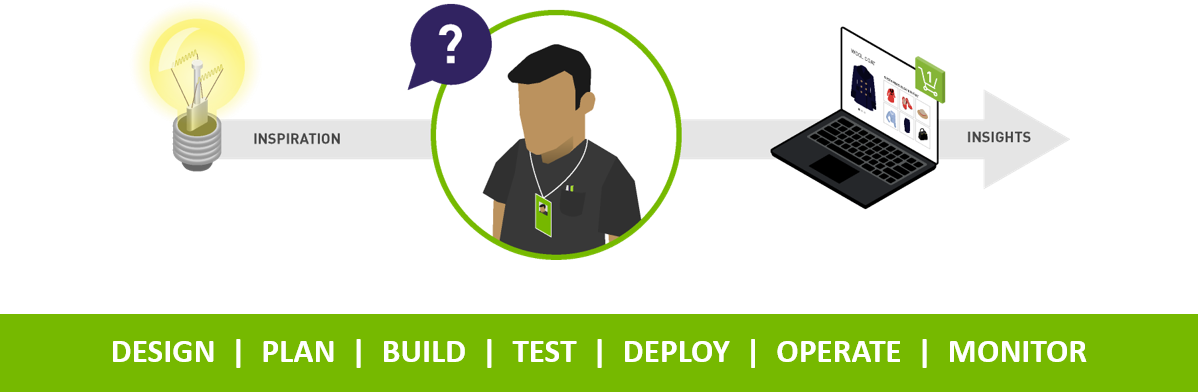
A handful of teams have flipped this around. Rather than send people to the learning, they bring the learning to people. Instead of a single destination, they build a connected ecosystem that sits across the tools their teams already use, surfacing the right help at the moment it’s needed and pulling it from the company’s own knowledge. Acting on it costs the employee almost nothing, because it never asks them to leave their work.
These teams also measure success differently. Rather than completion they will track whether people perform better on the job.
When content is cheap, context is the value
There’s a deeper shift underneath all this, and it’s the one we spend the most time talking through with clients. Until relatively recently, good content was scarce. Building a strong course took specialists, weeks, and real budget, so a well-stocked library was genuinely valuable. AI has changed that. A capable assistant will now explain almost any general concept in seconds, for next to nothing. What it can’t produce is the knowledge specific to a single organization: how a company actually works, and the judgment its experienced people have. That ‘human premium’ is what’s even more valuable now.
The same shift raises the value of the work AI can’t do. As it takes over routine and technical tasks, the work that’s left is the human kind: judgment, trust, the ability to read a situation and handle a relationship. Those skills are getting harder to automate, not easier. They grow through real work, shaped by how a company operates.
That’s the shift we work on with clients at Sify Digital Learning. Learning moves to where the work happens and draws on what the organization already knows. Its real test is what people can do afterward, on the job.