

Table of contents
For decades, cybersecurity strategies were built around an invisible advantage: time. A vulnerability was discovered. Researchers analyzed it. Attackers developed exploits. Enterprises assessed their exposure, prioritized risks, tested patches, and eventually secured their environments.
In most cases, the process would take up a major portion of a quarter. However, it worked because both attackers and defenders operated at human speed. But this equation is no longer relevant.
With the rise of agentic artificial intelligence (AI) systems powered by large language models (LLMs) that specialize in cybersecurity tasks, the window between the discovery of common vulnerabilities and exposures (CVEs) and the deployment of an exploit is shrinking rapidly. These AI tools can analyze codebases and systems, reason, write code, and execute multi-step tasks to jeopardize even the robustly secured systems.
After spending decades in technology and cybersecurity, I have seen industry move from an era where endpoint protection was the primary concern to today’s complex world of cloud, distributed infrastructure, digital ecosystems, and AI-led transformation.
Every transition created new security challenges. But AI introduces something fundamentally different. It changes the speed of the game.
Cybersecurity at the Speed of AI
Traditionally, vulnerability management depended on a crucial window between discovery and exploitation. A vulnerability would be identified, disclosed, studied, and then threat actors would attempt to weaponize it. Meanwhile, enterprises used this window to run diagnostics and release fixes for the bugs and vulnerabilities.
But what happens when that timeline collapses?
The emergence of agentic-class AI threats points towards a future where intelligent systems can scan applications, identify weaknesses, validate whether they are exploitable, and assist in generating attack methods at speeds never seen before. Enterprises will soon see that their 90-day traditional window will be reduced to just 90-minutes in some cases.
As a result, the challenge is no longer just vulnerability. It optimizes remediation from days to minutes, without compromising the quality of the patch or the overall security standards. But it is easier said than done.
Modern enterprises run complex environments consisting of legacy applications, cloud workloads, application programming interfaces (APIs), third-party integrations, and critical infrastructure. Patching these environments is not as simple as pushing a button. It requires testing, business approvals, compatibility checks, and operational planning.
However, attackers do not have the same constraints. In this new threat landscape, securing systems at the speed of AI will become an important business priority.
The End of Reactive Security
Cybersecurity cannot continue operating with yesterday’s assumptions. A reactive approach, waiting for vulnerabilities, evaluating them manually, and responding later, will struggle against machine-speed threats. The future belongs to organizations that can continuously understand their risk posture.
This is where approaches such as Continuous Threat Exposure Management (CTEM) become increasingly important. Instead of treating vulnerability management as a periodic exercise, CTEM focuses on continuously identifying exposure, prioritizing risks based on business impact, validating threats, and mobilizing remediation efforts.
The objective is simple: security teams should understand their environment before attackers do. But visibility alone is not enough. Organizations must also build mechanisms that buy them time.
Virtual patching, for example, enables enterprises to shield vulnerable systems through security controls such as web application firewalls, intrusion prevention systems, and endpoint protection while permanent fixes are being developed and deployed.
Similarly, Zero Trust and micro-segmentation ensure that if one system is compromised, attackers cannot freely move across the enterprise.
To enable this transition, cybersecurity leaders need to shift from a “find a patch for a known vulnerability” mindset to “how quickly can we detect, contain, and reduce the impact of a vulnerability we don’t even know about yet?”
Building Cyber Resilience for the Agentic AI Era
The next generation of cybersecurity will be defined by speed, intelligence, and integration.
Security cannot exist as an isolated technology function. Digital businesses today run on interconnected infrastructure across networks, data centers, cloud platforms, applications, APIs, and now AI systems. Protecting this ecosystem requires a security strategy that understands the entire foundation of technology.
At Sify, our approach is built around enabling enterprises through this transition.
Security must align with the needs of the business; neither excessive controls that slow innovation nor insufficient protection that creates unnecessary risk. The goal is to build a trusted digital infrastructure where businesses can expand confidently.
This requires three capabilities to work together. The first is advisory: understanding the organization’s environment, risks, regulatory requirements, and transformation goals.
The second is technology integration: bringing together the right security solutions across identity, infrastructure, applications, and operations.
Finally, the third is continuous management: enabling security operations with visibility, threat intelligence, automation, and faster response.
Agentic AI will transform both sides of cybersecurity. Attackers will use intelligence and automation, but defenders will also gain new capabilities to analyze threats, prioritize incidents, and respond faster.
The future will not belong to organizations with the largest number of security tools. It will belong to those that build security architectures capable of moving at the speed of AI.
To discuss more about your cybersecurity roadmap, write to us at marketing@sifycorp.com.
FAQs
Agentic AI cybersecurity threats refer to AI systems capable of autonomously discovering vulnerabilities, analyzing software, generating exploit code, and executing multi-step attack workflows with minimal human intervention. Unlike traditional automation, these systems can reason, adapt, and accelerate cyberattacks, significantly reducing the time between vulnerability discovery and exploitation.
Continuous Threat Exposure Management (CTEM) is a proactive cybersecurity approach that continuously identifies, validates, prioritizes, and mitigates security exposures based on business risk. Rather than relying on periodic vulnerability assessments, CTEM helps organizations maintain real-time visibility into their attack surface and respond to emerging threats before they become incidents.
Enterprise leaders should focus on reducing the time between detection and response. This includes improving asset visibility, adopting Continuous Threat Exposure Management (CTEM), implementing Zero Trust principles, strengthening Security Operations Centers (SOCs) with automation and threat intelligence, and ensuring cybersecurity is integrated into overall business and infrastructure strategy rather than treated as a standalone function.
Many existing security architectures were designed for human-driven attack timelines. Agentic AI significantly compresses the time between vulnerability discovery and exploitation, requiring organizations to rethink traditional vulnerability management. Sify recommends assessing attack surface visibility, patch management maturity, identity controls, SOC automation, and threat intelligence integration to determine readiness.
Sify combines cybersecurity consulting, technology integration, and 24×7 managed security operations to help enterprises prepare for emerging AI-powered threats. Its approach includes Continuous Threat Exposure Management (CTEM), virtual patching, Zero Trust implementation, threat intelligence, SOC modernization, and infrastructure-aware security designed for hybrid, cloud, and data center environments.
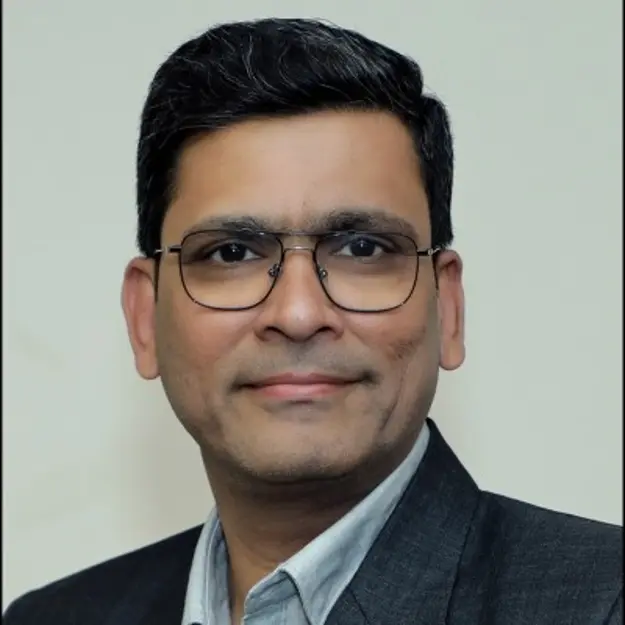
Murtaza Bhatia is a technology and cybersecurity leader with over two decades of experience across IT infrastructure, cybersecurity, cloud and enterprise technology solutions. As Vice President & Practice Head – Cybersecurity at Sify Technologies, he leads the company’s cybersecurity practice, focusing on helping enterprises strengthen their security posture, simplify security operations and build AI-ready digital environments.
Based in Mumbai, Murtaza is responsible for driving cybersecurity strategy, business growth, solution development and customer engagement across industries. His experience spans enterprise security, data center technologies, cloud, consulting and managed security services, with a strong focus on aligning security frameworks with evolving business and technology requirements.
Before joining Sify, Murtaza held leadership roles at organizations including NTT DATA, NTT Ltd. and Dimension Data, where he led cybersecurity, presales and technology consulting functions across enterprise accounts and industry verticals. His focus areas include cybersecurity simplification, AI-led security operations, enterprise resilience and securing AI ecosystems. He actively engages with enterprises on how AI and cybersecurity can work together to improve operational efficiency while maintaining strong governance and protection frameworks.