

Hyperscale Data Centers: Bringing Agility and Scalability across Enterprises
Hyperscale data centers are equipped with advanced technologies like virtualization, AI/ML-driven automation, and cloud computing, providing scalable, agile, and cost-effective solutions. In India, leading hyperscale computing companies offer state-of-the-art data center solutions offering robust security, redundant power, smart cooling systems, energy-efficient designs, and extensive network connectivity with cloud adjacency capabilities that modern businesses crave to accelerate their digital transformation journey.
Exploring India’s Potential as a Preferred Hyperscale Data Center Destination
The Indian data center market has witnessed phenomenal growth in recent years, driven by the increasing adoption of digitalization, internet penetration, e-commerce and cloud computing. Due to accelerated adoption of public cloud and data sovereignty policies, major global players are investing heavily in hyper-scale facilities, turning the nation into a hyperscale data center hub to meet the increasing demand of cloud services.
According to a report, the data center industry in India to cross 1.3 GW capacity and grow 2.4x by 2024. The hyperscale market is expected to grow 20% from 2021 to 2026, with over 300 new hyperscale sites in development globally today, that number is expected to surpass 1,000 by end of 2024.
Hyperscale Data Center Colocation Providers in India are Revolutionizing Data Center Infrastructure:
Having a data center in India has its own benefits. Several prominent data center providers have already made significant investments in data centers that offer massive colocation facilities, capable of housing high-performing servers and storage systems, providing immense computing power, storage capacity, and scalability. These data centers cater to all the needs of Public Cloud providers, global Enterprises, and OTT players, who require massive infrastructure to support their digital services and handle the exponential growth of data.
Let’s explore the reasons why India is an attractive destination for hyperscale Data Centers
- Vast market size and growing digital economy
The proliferation of data generation at edge, vast market size with favorable business environment, and India’s rapidly expanding digital economy, fuelled by the government’s Digital India initiative is making India- one of the main data centers destinations in the world. Policies aimed at data localization and data sovereignty has incentivized both domestic and international CSPs to establish hyperscale data centers in India to comply with these regulations.
- Increased adoption of cloud services in India
The increase in cloud services adoption in India reflects a broader trend of digitalization and technology-driven innovation. As organizations continue to realize the benefits of cloud computing, India is poised to play a pivotal role in the global cloud services landscape.

Cloud-born startups and automation-dependent businesses are defining the growth and scale of data center services. For instance, hybrid cloud adoption is enabling digital enterprises to leverage private infrastructure for compliance, sensitive workloads, greater control on the applications and environment, and tap into the high computing power of public clouds for bursting or scaling requirements, enabling digital innovation, and easier access to next-gen technologies like AI/ML, thus accommodating evolving business needs.
- Scalable data center campuses with growth options for up to 10 years
Scalability is one of the top challenges that hyperscalers and enterprises face as the demands on their technology systems increases. To help customers data processing seamlessly, hyperscale companies need exceptional storage, capacity, and flexibility to match their internal data processing requirements.
Hyperscale-ready data centers facilities in India are designed to become agile to cater the growing demand and meet any load they service. By setting up new availability zones set up and built-to-suit capabilities, most data center providers offer growth options for up to 10 years, enabling faster time to market in a cost-effective manner.
Sify’s data center in Rabale, Mumbai is an expandable mega data center campus designed for 10 towers, with 5 of them fully operational. The large campus has a 200 MW IT power capacity with up to 15,000+ racks. The remaining towers are in development and planning phase to favor hyperscale and retail clients’ dynamic workloads.
- Dense interconnect networks
The availability of dense interconnect networks has played a significant role in contributing to the growth of data centers in India. Hyperscale data center providers help businesses seamlessly connect to public clouds through high speed, low latency network while ensuring enhanced quality of services (QoS), secured information exchange, and guaranteed performance.
- Ample Stable power
The rapid growth of data center usage results in a growth of energy needs of the facility. Hyperscalers look for locations with access to stable and redundant power infrastructure, including multiple power grids, reliable electrical connections, and backup generators. India hosts several locations across its geographical reach that offers ample power and the capacity to scale up as hyperscalers’ operations expand. Data center providers assess the availability of power grids, transmission lines, and substations in the vicinity to attract and meet hyperscalers core requirements.
- Abundant Renewable Energy Potential
India offers substantial renewable energy potential, including solar and wind power. The country’s focus on renewable energy development aligns with the sustainability goals of hyperscale data center operators which is to make themselves carbon-neutral, making India an attractive choice for establishing environmentally friendly data centers. Most data center service providers in India are investing in green practices to meet the sustainability guidelines.
Sify data centers are green and energy-efficient data centers with 200+ MW of renewable power contracted. Additional nation-wide Green power for upcoming Data Center facilities is underway. With a reduction in carbon footprint by 28% during 2021-22, Sify ensures implementation of innovative practices to achieve low PUE (ASHRAE guidelines) and low WUE (Green Grid guidelines). It is a significant commitment to dedicated solar and wind renewable investment.
- Skilled Workforce and Technological Expertise
India has a large pool of skilled Data Center professionals with deep Subject matter expertise in electrical, mechanical and Data Center design as well as operations. India has traditionally been strong in developing IT professionals, with a strong foundation in software development, network engineering, and data management. This talent pool is critical for operating and managing hyperscale data centers. The presence of a thriving IT services industry further contributes to the availability of skilled personnel with the necessary expertise.
- Cost Advantages
India offers several cost advantages in terms of real estate, labor, and operational expenses compared to other established data center destinations. Lower land and construction costs, competitive energy prices, and ease of business driven by government support and diverse favoring policies contribute to the cost-effectiveness of establishing hyperscale data centers in India.
- Strategic Geographical Location
India’s geographic location provides a strategic advantage for international organizations seeking to expand their data center footprint. Its proximity to emerging markets in the Asia-Pacific region, the Middle East, and Africa makes India an ideal hub for serving these markets with low-latency connectivity. Hyperscale computing companies in India can act as gateways to these regions, facilitating faster data transmission and ensuring enhanced user experience.
The Mumbai subsea cable landing station serves as a key entry point for international internet traffic and facilitates high-speed connectivity to and from India. It supports global data communication and is vital for businesses and enterprises requiring robust international connectivity.
Chennai’s location along the Bay of Bengal makes it an ideal location for subsea cable landing stations. It serves as a critical gateway for international data traffic, enabling data transfer between India and other parts of the world. This connectivity is crucial for businesses, content delivery networks, and cloud service providers operating in India.
Sify data centers in Mumbai, Chennai, Noida (Delhi-NCR), Hyderabad, Kolkata, and Bangalore are strategically positioned to meet the unique needs of businesses and organizations in these expanding regions. They play a critical role in supporting government initiatives, digital transformation efforts, technological innovation, and data-driven operations.
Wrapping up!
India possesses numerous attributes that make it an attractive data center powerhouse. The country has witnessed massive infrastructure investments in the past years from International and domestic companies who recognized the potential of India as a strategic location to establish their hyperscale infrastructure. Keeping these investments and key factors in consideration, it can be assumed that in the future, the hyperscalers will invest more in India while focusing on the sustainability standards.
As India’s first commercial data center provider, Sify encompasses an extensive infrastructure with 11 DCs PAN India with 100 MW capacity. Additionally, with an aim to add 350 MW to their infrastructure by 2025, Sify will capture a large portion of the market hosting a mix of hyperscalers and retail clients.
Know more about Sify Hyperscale data centers here!!
Sustainable Green Data Centers: How to Build Green IT Infrastructures
The rapid growth of enterprise data centers in India has led to an increasing focus on the concept of green data centers. Many businesses are now opting for alternative energy solutions for their data centers, as they offer numerous benefits. One key advantage is energy savings, which leads to cost reductions for businesses. Green data centers also contribute to environmental sustainability by reducing carbon emissions and optimizing the use of natural resources.
Comparing India’s data statistics to global figures as of 2021, India represents 18% of the global population but has lower Internet penetration, e-commerce shopping, social media users, and mobile subscribers, all at 14%. However, India’s total mobile data traffic is significant at 113 EB, and total media traffic is 588 EB. Currently, there are 138 operational data centers in India, utilizing 737 MW power. Over the next 3-4 years, an additional 50 data centers are expected to be established, resulting in a power demand of 1050 MW. In the next 7 years, the data center consumption is projected to exceed 3000 MW of IT load demand.
This level of enormous upcoming “data center capacity” has resulted in a significant increase in the volume of energy consumption by data centers, which can have a lasting impact on the environment, and finally result in climate change.
To solve this issue, the concept of sustainable data centers has come out to reduce the environmental impact of data centers while still meeting the growing demand for digital services. As per the Green Data Center Global Market Report 2023, the global green data center market is expected to grow to $139.93 billion in 2027 at a CAGR of 19.6% for the forecasted period 2023-2027.
With this, let’s deep dive into understanding sustainable data centers, advantages of green data centers, and how to build sustainable data centers.
What Are Sustainable Data Centers?
Simply put, a sustainable data center or a green energy data center is designed and operated with a focus on environmental and social sustainability.
- Sustainability in data centers involves the implementation of a variety of practices, such as the use of renewable sources of energy like solar or wind power.
- Green data centers also help optimize energy use through efficient cooling and lighting systems, reducing water usage, and utilizing eco-friendly building materials and technologies. Green data centers also help in promoting responsible waste management practices.
Sustainable data centers strive to balance their operational needs with environmental responsibility, making significant efforts to reduce energy consumption, greenhouse gas emissions, and water usage while promoting the adoption of renewable energy sources.
Advantages of Green Data Centers
Eco-friendly data centers are crucial for reducing the environmental impact of the IT industry in India. Building sustainable data centers demonstrates a company’s commitment to sustainability and corporate social responsibility. Here are a few benefits of Green Data Centers:
- Energy Efficiency: Green data centers employ various technologies and practices to optimize energy usage. They use energy-efficient servers, cooling systems, and power distribution mechanisms, reducing overall electricity consumption and carbon emissions.
- Reduced Carbon Footprint: Green data centers emit fewer greenhouse gases compared to traditional data centers. By adopting sustainable practices, they help combat climate change and contribute to global efforts to reduce carbon emissions.
- Renewable Energy Integration: Many green data centers rely on renewable energy sources such as solar, wind, hydroelectric, or geothermal power. By harnessing clean energy, these centers decrease their reliance on fossil fuels and contribute to a lower carbon footprint.
- Compliance With Environmental Regulations: Green data center solutions help companies comply with stringent government regulations aimed at reducing carbon emissions and promoting sustainability.
- Cost Savings: Green energy data centers offer economic advantages by reducing energy costs and improving overall efficiency. Through energy efficiency and the use of renewable energy sources, green data centers can significantly lower operational costs. Over time, these savings can be substantial and may offset the initial investment in green technologies.
- Enhanced Corporate Social Responsibility (CSR): Companies that invest in green data centers demonstrate their commitment to sustainability and environmental responsibility. This can boost their reputation and appeal to environmentally conscious customers and partners.
- Longer Equipment Lifespan: Green data centers often prioritize the use of high-quality, energy-efficient hardware. This can lead to longer lifespans for servers and other equipment, reducing electronic waste and the need for frequent replacements.
- Resilience and Disaster Recovery: Most green data centers are built with redundancy and resilience in mind, reducing the risk of data loss during power outages or other emergencies. This ensures critical data remains accessible and secure.
- Leadership and Competitive Advantage: By adopting green practices, companies can position themselves as industry leaders in sustainability. This can lead to a competitive advantage as customers and investors increasingly prioritize environmentally responsible organizations.
How to Build Sustainable Data Centers?
To build sustainable data centers, companies must adopt a range of proven strategies and technologies that minimize their IT infrastructure’s environmental impact, maximize energy efficiency, and reduce carbon emissions.
- Upgrade to New Equipment: While regular maintenance and repairs can improve equipment functionality, over time, equipment becomes less reliable and more expensive to maintain. Hence, data center companies must invest in good-quality, cost-friendly data center equipment, procured from a reputed vendor. It is more advantageous in the long run to avoid the costly risk of data center downtime caused by aging and faulty equipment.
- Optimize Energy Efficiency: The first step in optimizing energy efficiency is to choose energy-efficient hardware. Proper hardware and software configuration, such as implementing power management features, is also essential for optimizing energy efficiency. Data centers must accurately measure the consumption of energy in real time and create timely alerts to keep a check on energy usage, in order to optimize energy efficiency. Identifying alternate sources of energy also helps in optimizing energy efficiency.
- Intelligent Power Management: Managing power prudently can help optimize power usage and increase energy efficiency. Through intelligent power management, predictive analytics, and efficient data center infrastructure management, a data center can maximize resource utilization, minimize energy waste, and enhance overall sustainability. Intelligent monitoring, control, and allocation of power resources within a data center infrastructure can help boost the recovery time of devices that are managed remotely.
- Virtualization: Virtualization allows multiple virtual servers to run on a single physical server in a data center, which helps to optimize energy efficiency and reduce the environmental impact of multiple physical data centers. This not only improves data center resiliency but also makes a data center more sustainable.
- Using Renewable Energy Sources: Another way to reduce carbon emissions and improve sustainability is incorporating renewable energy sources into data center operations. It can involve various mechanisms like installing solar panels, wind turbines, or hydroelectric generators. Data centers can also invest in off-site renewable energy projects, such as wind or solar farms, that can offset their energy consumption.

- Modern Cooling Systems: Several strategies to improve cooling efficiency include using free cooling systems that use outside air to cool a data center instead of traditional air conditioning. Another option is liquid cooling, which uses a liquid coolant to directly cool server components. Installing efficient airflow management mechanisms improves the effectiveness of cooling systems and reduce energy usage. Optimizing airflow is a great way to ensure sustainability and reduce operational costs in data centers.
- Implementing Automation: Automated power management tools can optimize system settings for maximum energy efficiency. Several practices, such as turning off unused devices or putting servers into low-power states during periods of low usage, can improve energy efficiency. Sustainable data centers use software-based smart design principles to optimize energy efficiency and reduce environmental impact.
- Conduct Regular Energy Audits: Regularly monitoring and assessing energy usage and carbon emissions is essential for identifying areas for improvement and ensuring data centers remain as energy efficient as possible. Conducting energy audits can provide deeper insights into energy usage patterns, identify areas for improvement, and help prioritize energy-saving initiatives.
Meeting Data Center Sustainability KPIs
Measuring and monitoring sustainability performance through Key Performance Indicators (KPIs) is essential for data centers to assess their environmental impact, measure progress, and undergo continuous improvement. Some of these KPIs include:
- Power Usage Effectiveness (PUE)
- Water Usage Effectiveness (WUE)
- Carbon Usage Effectiveness (CUE)
- Server Utilization
- Recycling and Waste Management
- Greenhouse Gas Emissions
- Compliance with Sustainability Standards
Going Green With Sify Data Centers
With over two decades of thought leadership in IT infrastructure, Sify has been delivering transformative business value to enterprises across the globe. Sify provides carbon-neutral and energy-efficient data centers by incorporating renewable energy sources, optimizing power utilization, offsetting carbon emissions, and automation through AI/ML. While ensuring sustainability, we offer high-efficiency equipment that complies with green practices like adhering to ASHRAE guidelines, implementing a carbon abatement policy, and ISO 14001 Environmental Certification.
In 2022, Sify Technologies made a commitment to renewable energy for its data center business in India. We have made power purchase agreements (PPAs) with Vibrant Energy Holdings, a majority-owned subsidiary of Blue Leaf Energy Asia Pte. Ltd. Having contracted over 230 MW of green power, Sify is successfully making progress in reducing its customers Power Usage Effectiveness (PUE) and Water Usage Effectiveness (WUE)
Wrapping up!
To build a zero-carbon data center, one must follow a holistic approach that considers the entire lifecycle of the data center, right from the design and construction to ongoing operations and maintenance. By implementing a range of strategies and technologies that optimize energy efficiency and reduce carbon emissions, data center operators can build green IT infrastructures that are environmentally friendly and economically sustainable.
Learn more about Sify green data centers now!
How to choose the right data center service provider for your needs
During the COVID-19 pandemic, it became increasingly difficult for organizations to manage their in-house data centers due to challenges with scalability, break/fix support, and operations and maintenance staffing requirements. As a result, many organizations moved their in-house data center to a colocation provider and some of their applications to public clouds.
Modern-day data center powerhouses provide not only the necessary infrastructure and state-of-the-art technology but also advanced data analytics and automation capabilities. They offer streamlined operations, business continuity, reduced Capex/Opex, flexible engagement models, superior end-customer experience, support for business expansion, and accelerated digital transformation, among other outcomes.
Selecting the right data center: Key factors in play
Data center service providers typically offer an extensive array of services to accommodate diverse customer requirements. These include on-premise solutions, colocation options, wholesale and retail offerings, hyperscale capabilities, as well as specialized offerings like built-to-suit (BTS) data centers, green data centers, and comprehensive managed services. Businesses can find tailored solutions that align with their specific needs and preferences. It is important to choose the right data center service provider that can provide such integrated services, based on your business objectives and digital priorities.
[Interested to know more about Sify’s world-class data center facilities? Learn more]
Here are some factors to consider when selecting a data center service provider:
- Scalability: Rack space is a critical and limited commodity for many service providers. Selecting world-class data center providers with the capacity to build campuses capable of accommodating 8,000+ racks and 50 MW IT capacity, for example, will enable businesses to plan their scale-up within their choice campus. They also stand to benefit from a robust support/service stack and comprehensive monitoring of the data center infrastructure.
- Security: Be sure to prioritize data centers with robust security systems. IT infrastructure protection, including data security through encryption, firewalls, intrusion detection, and prevention, needs to be implemented – at the very minimum. Your data center service provider should also have multilayer physical security from the perimeter wall up to the cage, including mantraps, turnstiles, and biometric access control, in addition to surveillance cameras and security personnel, to restrict unauthorized individuals from entering secure areas or accessing confidential information.
- Network connectivity: Choose a data center provider with excellent network connectivity, including multiple internet service providers (ISPs) offering IP transit nodes, high-speed connections, multi-cloud connectivity, data center interconnectivity, and connectivity to customer premises. Data centers should have at least 3-4 fiber entry paths to the building, ensuring seamless connectivity and resilience. Additionally, the presence of low-latency cloud on-ramp services, including cloud access nodes, facilitates fast and direct interconnection with public cloud applications. These aspects collectively contribute to creating a robust, efficient, high-performing, and well-connected data center environment.
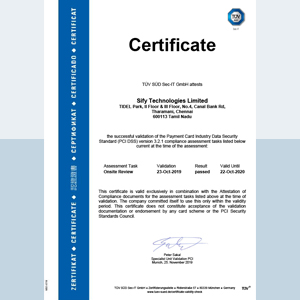
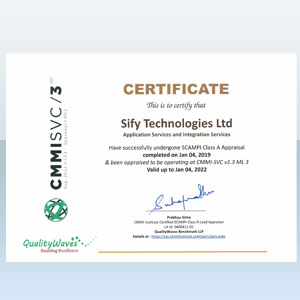
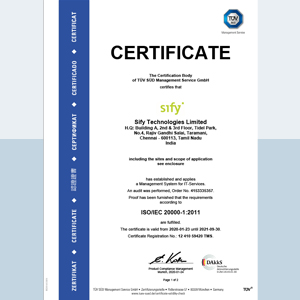
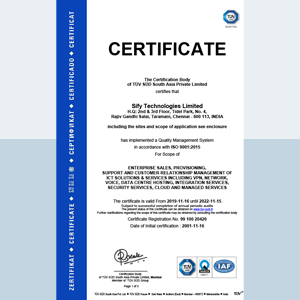
- Certificates, SLAs, and compliance: When selecting a data center provider, the importance of having the necessary certificates and service level agreements (SLAs) cannot be overstated. Certifications from industry authorities are highly desirable as they validate the provider’s adherence to industry best practices, process reliability, and security standards. A tier-3 data center with ISO 27001, ISO 20000, PCI-DSS, SoC 1, SoC 2 and ISO 1400, and ISO 50000 certifications is ideal. With its robust compliance framework, 99.99% uptime, and clear SLAs outlining performance commitments, Sify’s data centers deliver the highest levels of security, operational excellence, and environmental responsibility to customers.
- Industry experience: Data centers that have subject matter experts across functions can prove instrumental in managing diverse workloads. Extensive cross-industry experience gives them the ability to address the unique requirements of various sectors, such as finance or healthcare. For example, as a leading data center service provider in India, Sify has extensive experience across diverse industry sectors. Sify’s digital data center infrastructure services offer real-time visibility, measurability, predictability, and service support specifically required by different industries to offer customers high availability and seamless experiences.
- Green power: Many organizations today have committed to ESG goals, such as carbon neutrality, waste reduction, and power conservation. In this context, it becomes important to choose a data center provider that is invested in renewable energy, achieved by signing Power Purchase Agreements (PPA). Solar and wind power are increasingly viable options for clean energy. By choosing a data center service provider that adopts sustainable measures including renewable power, energy-efficient equipment, and practices, your business can achieve environmental goals while benefiting from competitive energy costs.
Adherence to safety practices, rules, and regulations are also key EHS considerations. Leading green data center service providers, like Sify, invest in transparent, environmentally conscious, and ethical business practices, adhering 100% to local and global regulations, and outperforming the competition when it comes to sustainability, corporate social responsibility, and people practices.
[Going green? Know how Sify’s green data centers are pushing the envelope on sustainability. Learn more]
- Data center footprint: Data centers strategically located in multiple regions ensure low latency and high-speed network connections, enabling efficient data transmission and improved user experience. A widespread presence allows data centers to establish diverse network routes and redundancy, minimizing the risk of network failures or disruptions.
- Partnership with hyperscalers: Hyperscale partnerships enable data centers to offer seamless integration with leading cloud platforms, offering flexible hybrid cloud solutions and enhanced performance. Ensure you choose a service provider that banks on the power of partnerships and leverages the sharing of expertise and resources to stay at the forefront of technological advancements.
- Automation and innovation: AI/ML-driven automation is increasingly important in developing innovations that optimize operations, reduce costs, enhance performance, improve reliability and sustainability, and elevate service quality. Integration of AI/ML in vendor performance evaluation and SLA management, including metrics like MTTR and MTBF, further strengthens operations. For instance, Sify’s AI/ML capabilities have contributed to significant improvements of over 20% in project delivery turnaround time, showcasing the tangible benefits of data analytics in the data center domain.
- Backup and DR: It is essential to consider the risk of natural disasters such as earthquakes, floods, hurricanes, or wildfires. Select a location with minimal risk to ensure the safety and longevity of your IT infrastructure. It is also crucial to select a data center service provider with adequate backup and disaster recovery (DR) capabilities. This ensures that in the event of an unforeseen incident, the data center can quickly recover operations with little or no data loss.
Wrapping up!
While these parameters will provide you with a solid basis for comparison, allow yourself to make the final decision based on your business’s specific objectives. Remember, there’s no one-size-fits-all approach when it comes to choosing a data center service provider.
As India’s pioneering data center service provider for over 22 years, it has been Sify’s continuous endeavor to innovate, invest in, and integrate new-age technologies. Learn more about how our state-of-the-art data centers have been delivering transformative business value to enterprises across the globe.
To Infinity and Beyond!
Vamsi Nekkanti looks at the future of data centers – in space and underwater
Data centers can now be found on land all over the world, and more are being built all the time. Because a lot of land is already being utilized for them, Microsoft is creating waves in the business by performing trials of enclosed data centers in the water.
They have already submitted a patent application for an Artificial Reef Data Center, an underwater cloud with a cooling system that employs the ocean as a large heat exchanger and intrusion detection for submerged data centers. So, with the possibility of an underwater cloud becoming a reality, is space the next-or final-frontier?
As the cost of developing and launching satellites continues to fall, the next big thing is combining IT (Information Technology) principles with satellite operations to provide data center services into Earth orbit and beyond.
Until recently, satellite hardware and software were inextricably linked and purpose-built for a single purpose. With the emergence of commercial-off-the-shelf processors, open standards software, and standardized hardware, firms may reuse orbiting satellites for multiple activities by simply downloading new software and sharing a single spacecraft by hosting hardware for two or more users.
This “Space as a Service” idea may be used to run multi-tenant hardware in a micro-colocation model or to provide virtual server capacity for computing “above the clouds.” Several space firms are incorporating micro-data centers into their designs, allowing them to analyze satellite imaging data or monitor dispersed sensors for Internet of Things (IoT) applications.

HPE Spaceborne Computer-2 (a set of HPE Edgeline Converged EL4000 Edge and HPE ProLiant machines, each with an Nvidia T4 GPU to support AI workloads) is the first commercial edge computing and AI solution installed on the International Space Station in the first half of 2021 (Image credit: NASA)
Advantages of Space Data Centers
The data center will collect satellite data, including images, and analyze it locally. Only valuable data is transmitted down to Earth, decreasing transmission costs, and slowing the rate at which critical data is sent down.
The data center might be powered by free, abundant solar radiation and cooled by the chilly emptiness of space. Outside of a solar flare or a meteorite, there would be a minimal probability of a natural calamity taking down the data center. Spinning disc drives would benefit from the space environment. The lack of gravity allows the drives to spin more freely, while the extreme cold in space helps the servers to handle more data without overheating.
Separately, the European Space Agency is collaborating with Intel and Ubotica on the PhiSat-1, a CubeSat with AI (Artificial Intelligence) computing aboard. LyteLoop, a start-up, seeks to cover the sky with light-based data storage satellites.
NTT and SKY Perfect JV want to begin commercial services in 2025 and have identified three primary potential prospects for the technology.
The first, a “space sensing project,” would develop an integrated space and earth sensing platform that will collect data from IoT terminals deployed throughout the world and deliver a service utilizing the world’s first low earth orbit satellite MIMO (Multiple Input Multiple Output) technology.
The space data center will be powered by NTT’s photonics-electronics convergence technology, which decreases satellite power consumption and has a stronger capacity to resist the detrimental effects of radiation in space.
Finally, the JV is looking into “beyond 5G/6G” applications to potentially offer ultra-wide, super-fast mobile connection from space.

The Challenge of Space-Based Data Centers
Of course, there is one major obstacle when it comes to space-based data centers. Unlike undersea data centers, which might theoretically be elevated or made accessible to humans, data centers launched into space would have to be completely maintenance-free. That is a significant obstacle to overcome because sending out IT astronauts for repair or maintenance missions is neither feasible nor cost-effective! Furthermore, many firms like to know exactly where their data is housed and to be able to visit a physical site where they can see their servers in action.
While there are some obvious benefits in terms of speed, there are also concerns associated with pushing data and computing power into orbit. In 2018, Capitol Technology University published an analysis of many unique threats to satellite operations, including geomagnetic storms that cripple electronics, space dust that turns to hot plasma when it reaches the spacecraft, and collisions with other objects in a similar orbit.
The concept of space-based data centers is intriguing, but for the time being-and until many problems are worked out-data centers will continue to dot the terrain and the ocean floor.
Elite Teams recover Systems from Failures in No time (MTTR)
Credits: Published by our strategic partner Kaiburr
Effective Teams in a right environment under Transformative Leadership by and large achieves goals all the time, innovates consistently, resolves issues or fixes problems quickly.

DevOps is to primarily improve Software Engineering practices, Culture, Processes and build effective teams to better serve and delight the Users of IT systems. DevOps focuses on productivity by Continuous Integration and Continuous Deployment (CI-CD) to effectively deliver services with speed and improve Systems Reliability.
The productivity of a System is higher with high performance teams and slower with low performance teams. High performance teams are more agile and highly reliable. We can have better insights on Team performance by measuring Metrics.
DORA (DevOps research and assessment) with their research on several thousands of software professionals across wide geographic regions had come up with their findings that the Elite, High performance, medium and low performance can be differentiated by just the four metrics on Speed and Stability.
The metric ‘Mean time to restore(MTTR) ‘, is the average time to restore or recover the system to normalcy from any production failures. Improving on MTTR, Our teams become Elite and reduces the heavy cost of System downtime.

Measure MTTR
MTTR is the time measured from the moment the System fails to serve the Users or other Systems requests in the most expected way to the moment it is brought back to normalcy for the System’s intended response.
The failure of the System could be, because of semantic errors in the new features or new functions or Change requests deployed, memory or integration failures, malfunctioning of any physical components, network issues, External threats(hacks) or just the System Outage.
The failure of the running system against its intended purpose is always an unplanned incident and its restoration to normalcy in the least possible time depends on the team’s capability and its preparedness. Lower MTTR values are better and a higher MTTR value signifies an unstable system and also the team’s inability to diagnose the problem and provide a solution in less time.
MTTR doesn’t take into account the amount of time and resources the teams spend for their preparedness and the proactive measures but its lower value indirectly signifies teams strengths, efforts and Savings for the Organization. MTTR is a measure of team effectiveness.
As per CIO insights, 73% say System downtimes cost their Organization more than $10000/day and the top risks to System availability are Human error, Network failures, Software Bugs, Storage failures and Security threats (hacks).

How to Calculate MTTR
We can use a simple formula to calculate MTTR.
MTTR, Mean time to restore = Total Systems downtime / total no. of Outages.
If the System is down for more time, MTTR is obviously high and it signifies the System might be newly deployed, complex, least understood or it is an unstable version. A system down for more time and more frequently causes Business disruptions and Users dissatisfaction. MTTR is affected by the team’s experience, skills and the tools they use. A highly experienced, right skilled team and the right tools they use helps in diagnosing the problem quickly and restoring it in less time. Low MTTR value signifies that the team is very effective in restoring the system quickly and that the team is highly motivated, collaborates well and is well led in a good cultured environment.
Well developed, elite teams are like the Ferrari F1 pit shop team, just in the blink of an eye with superb preparedness, great coordination and collaboration, they Change tyres, repairs the F1 Car and pushes it into the race. MTTR’s best analogy is the time measured from the moment the F1 Car comes into the pit shop till the moment it is released back onto the F1 track. All the productivity and Automation tools our DevOps teams use are like the tools the F1 pitstop team uses.

How to improve, lower MTTR
Going with the assumption that a System is stable and still the MTTR is considerably high then there is plenty of room for improvement. In the present times of AI, we have the right tools and DevOps practices to transform teams to high performance and Systems to lower MTTR. Reports of DORA says high performance teams are 96x faster with very low mean time to recover from downtime.
It seems they take very less time, just a few minutes to recover the System from failures than others who take several days. DevOps teams that had been using Automation tools had reduced their costs at least by 30% and lowered MTTR by 50%. The 2021 Devops report says 70% of IT organizations are stuck in the low to mid-level of DevOps evolution.
Kaiburr’s AllOps platform helps track and measure MTTR by connecting to tools like JIRA, ServiceNow, Azure Board, Rally. You can continuously improve your MTTR with near real time views like the following


You can also track and measure other KPIs, KRIs and metrics like Change Failure Rate, Lead Time for Changes, Deployment Frequency. Kaiburr helps software teams to measure themselves on 350+ KPIs and 600+ Best Practices so they can continuously improve every day.
Reach us at marketing@sifycorp.com to get started with metrics driven continuous improvement in your organization.
Credits: Published by our strategic partner Kaiburr
Visit DevSecOps – Sify Technologies to get valuable insights
How Hyperscale Data Centers are reshaping India’s IT
In today’s times, a common question arises while discussing technology: what is the difference between Data Centers and Hyperscale Data Centers?
The answer: Data Centers are like hotels – the spaces are shared with multiple guests, whereas, in the case of Hyperscale Data Centers, the entire building/campus are dedicated to a single customer.
Companies like Amazon, Google, Microsoft, Facebook, and OTTs, which have millions and millions of end-users, have infused their services into our day-to-day life to cater to our personal and professional needs. Data centers are the backbone of this digital world.
This is where Hyperscale Data Centers come into play and provide seamless experiences to such massive end-users.
The term Hyperscale means the ability of an infrastructure to scale up when the demand for the service increases. The infrastructure comprises of computers, storage, memory, networks etc. The maintenance of such infrastructure is not an easy task. Constant monitoring of the machines, the server hall temperature and humidity control check and other critical parameters are monitored 24×7 by the Building Management System (BMS).

Data Centers are important because everyone uses data. It is safe to say that perhaps everyone, from individual users like you and me to multinationals, used the services offered by data centers at some point in their lives. Whether you’re sending emails, shopping online, playing video games, or casually browsing social media, every byte of your online storage is stored in your data center. As remote work quickly becomes the new standard, the need for data centers is even greater. The cloud data center is rapidly becoming the preferred mode of data storage for medium and large enterprises. This is because it is much more secure than using traditional hardware devices to store information. Cloud data centers provide a high degree of security protection, such as firewalls and back-up components, in the event of a security breach. The COVID-19 pandemic paved the way for the work-from-home culture, and the global internet traffic increased by 40% in 2020
Also, the rise of new technologies like the Internet of Things (IoT), Artificial Intelligence (AI), Machine Learning (ML), 5G, Augmented Reality (AR), Virtual Reality (VR) and Blockchain caused an explosion of data generation and an increased demand for storage capacities.
Cloud infrastructure has helped businesses and governments with solutions to respond to the pandemic. To cater to such needs, the demand for cloud data center facilities has increased. A heavy infrastructure with a lot of power is needed to cater to such needs.

Data Centers have quite a negative impact on the environment, because of the large consumption of power sources and has 2% of the global contribution of greenhouse gas emissions. To reduce these carbon footprints and work towards a sustainable environment, many data center providers globally have started using power from renewable energy sources like solar and wind energy through Power Purchase Agreements (PPA). The Data Center power consumption can be lowered by regularly updating their systems with new technologies and regular maintenance of the existing infrastructure.
The Indian market will see multifold growth in the Data Center industry due to ease of doing business in the country and thanks to the attractive subsidiaries provided by the state governments, huge investments are committed in the next four years.
Interesting facts about Data Center:
- A large Data Center uses the electricity equivalent to a small Indian town.
- The largest data center in the world is of 10.7 million sq.ft. in China, approximately 1.5 times of the Pentagon building in USA.
- Data Centers will nearly consume 2% of the world’s electricity by 2030. Hence, the Green Data Center initiatives are taken up by various organizations.
How OTT platforms provide seamless content – A Data Center Walkthrough
With the number of options and choices available, it almost seems like there’s no end to what you can and can’t watch on these platforms. It shouldn’t be difficult for a company like Netflix to store such a huge library of shows and movies at HD quality. But the question remains as to how they provide this content to so many people, at the same time, at such a large scale?
The India CTV Report 2021 says around 70% users in the country spend up to four hours watching OTT content. As India is fast gearing up to be one of the largest consumers of OTT content, players like Netflix, PrimeVideo, Zee5 et al are competing to provide relevant and user-centric content using Machine Learning algorithms to suggest what content you may like to watch.
With the number of options and choices available, it almost seems like there’s no end to what you can and can’t watch on these platforms. It shouldn’t be difficult for a company like Netflix to store such a huge library of shows and movies at HD quality. But the question remains as to how they provide this content to so many people, at the same time, at such a large scale?
Here, we attempt to provide an insight into the architecture that goes behind providing such a smooth experience of watching your favourite movie on your phone, tablet, laptop, etc.
Until not too long ago, buffering YouTube videos were a common household problem. Now, bingeing on Netflix shows has become a common household habit. With Data-heavy and media-rich content now being able to be streamed at fast speed speeds at high quality and around the world, forget about buffering, let alone downtime due to server crashes (Ask an IRCTC ticket booker). Let’s see how this has become possible:
Initially, to gain access to an online website, the data from the origin server (which may be in another country) needs to flow through the internet through an incredulously long path to reach your device interface where you can see the website and its content. Due to the extremely long distance and the origin server having to cater to several requests for its content, it would be near impossible to provide content streaming service for consumers around the world from a single server farm location. And server farms are not easy to maintain with the enormous power and cooling requirements for processing and storage of vast amounts of data.
This is where Data Centers around the world have helped OTT players like Netflix provide seamless content to users around the world. Data Centers are secure spaces with controlled environments to host servers that help to store and deliver content to users in and around that region. These media players rent that space on the server rather than going to other countries and building their own and running it, and counter the complexities involved in colocation services.

How Edge Data Centers act as a catalyst
Hosting multiple servers in Data Centers can sometimes be highly expensive and resource-consuming due to multiple server-setups across locations. Moreover, delivering HD quality film content requires a lot of processing and storage. A solution to tackle this problem are Edge Data Centers which are essentially smaller data centers (which could virtually also be a just a regional point of presence [POP] in a network hub maintained by network/internet service providers).
As long as there is a POP to enable smaller storage and compute requirements and interconnected to the data center, the edge data center helps to cache (copy) the content at its location which is closer to the end consumer than a normal Data Center. This results in lesser latency (or time taken to deliver data) and makes the streaming experience fast and effortless.
Role of Content Delivery Networks (CDN)
The edge data center therefore acts as a catalyst to content delivery networks to support streaming without buffering. Content Delivery Networks (CDNs) are specialized networks that support high bandwidth requirements for high-speed data-transfer and processing. Edge Data Centers are an important element of CDNs to ensure you can binge on your favorite OTT series at high speed and high quality.

Although many OTT players like Sony/ Zee opt for a captive Data Center approach due to security reasons, a better alternative would be to colocate (outsource) servers with a service provider and even opt for a cloud service that is agile and scalable for sudden storage and compute requirements. Another reason for colocating with Service providers is the interconnected Data Center network they bring with them. This makes it easier to reach other Edge locations and Data Centers and leverage on an existing network without incurring costs for building a dedicated network.
Demand for OTT services has seen a steady rise and the pandemic, in a way, acted as a catalyst in this drive.
However, OTT platform business models must be mindful of the pitfalls.
Target audience has to be top of the list to build a loyal user base. New content and better UX (User Experience) could keep subscribers, who usually opt out after the free trial, interested.
The infrastructure and development of integral elements of Edge Data Centers are certain to take centerstage to enable content flow more seamlessly in the future that would open the job market to more technical resources, engineers and other professionals.
Accelerating strategic expansion through 24×7 colocation
Comprehensive data center solutions at Mumbai, Noida and Chennai help leading US cloud security company to build and fortify go-to-market plans
Project Objective
To build multiple points of presence and to address the growing business challenges of the customer. To help the client in their go to market strategy by providing colocation services at Mumbai, Noida & Chennai.
Project Model
Infrastructure as a Service (IaaS) model
Sify’s Uniqueness
- Sify’s data center footprint across the key markets of India
- Value proposition and competitive pricing
- Carrier-neutral facilities and 24×7 onsite support.
- Sify’s ecosystem to provide one-stop-shop solutions to customer
Integrated Value and Outcome
- Data center services at multiple locations were provided starting from Noida and Mumbai.
- Sify’s unique value proposition helped the client to expand its service with Sify at Chennai.
- Sify provided secure and reliable infrastructure.
- The project was completed within given timelines and helped customer to start their operations.
Value for Client
- Sify has secure infrastructure and follows global standards which the client complied with
- On-time delivery of project helped client with timely go-live and operations kickstart.
How Data Center forms the epicenter of IT infrastructure
SPEAKERS:
Kirtikar Ojha, Business Head – Data Center Services, Sify Technologies
DATE:
Wednesday, December 02, 2015
DESCRIPTION:
Businesses are becoming more and more Information-driven. As data becomes the most important organizational asset; Data Centers need to be reliable, safe, optimized, efficient and manageable and de-risked, because any risk to data would have a seismic impact on the entire business. How to formulate a comprehensive Data Center strategy? Find out in this webinar