


Centralizing and sharing creative assets for ONNIT
Triggering productivity boost with automated workflows and accelerated time to market with external content sharing
Credits: Original content published by our strategic partner Tenovos
Project Objective
ONNIT had an overwhelming amount of content that was used for everything from digital marketing to product labels. The company used more than 40 hard drives to store their digital assets, on top of a Google Drive system that didn’t follow a standard organizational structure. This led to a significant waste of time and resources recreating existing assets or looking for content and finding nothing, and constant flow of content-related requests from users.
Project Model
Sify Digital Asset Management Solution
Sify’s Uniqueness
Leverage AI/ML to create an intuitive, consumer-centric user experience that delivers a 360° view of content. Simplify asset lifecycle management across content creation, ensure faster approvals on proofing and rights management, and disseminate content across channels seamlessly.
Value for the client
Increased content searchability through centralization, productivity boost with automated workflows, accelerated time to market with external content sharing – all enabled by the most innovative, modern digital asset management platform built using compelling AWS services and products.


Creative asset distribution at scale for Peanuts
Safe storage of creative IP within the Sify DAM, connected to a rights management platform to enable creative asset distribution to licensees
Credits: Original content published by our strategic partner Tenovos
Project Objective
Smart licensing has kept Peanuts top of mind for consumers around the world, but the scale of its licensing program was becoming challenging to manage. Folder-based navigation and content organization made it hard for licensees searching for the perfect character pose for their products to find what they needed. Ultimately, this lack of discoverability led the team to search for a new, modern digital asset management technology.
Project Model
Sify Digital Asset Management Solution
Sify’s Uniqueness
Leverage AI/ML to create an intuitive, consumer-centric user experience that delivers a 360° view of content. Simplify asset lifecycle management across content creation, ensure faster approvals on proofing and rights management, and disseminate content across channels seamlessly.
Value for the client
Today, the Peanuts creative IP is safely stored within the DAM, which is connected to a rights management platform to enable the distribution of creative assets to licensees around the world.

Kriti Arora (Max Life) speaks about positive impact of content on business with Sify DAM platform
In an exclusive closed door Sify DAM Roundtable Kriti Arora shares how she measures the business impact of the content she publishes.
Sify Tenovos DAM webinar | Part 1/2
Is your content telling a powerful story? A modern AI/ML DAM platform makes all the difference
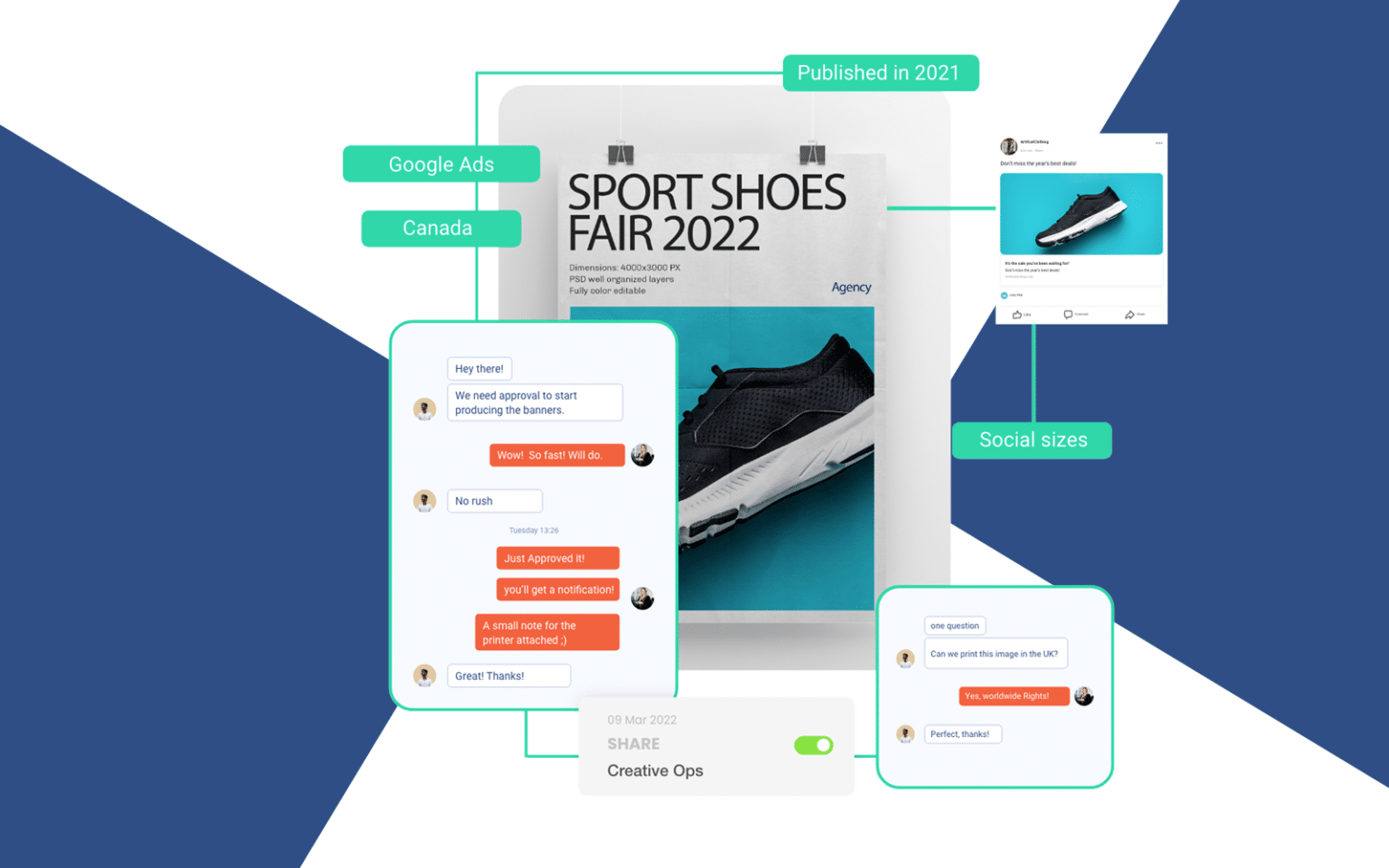
DAM Insights Your Entire Organization Will Actually Use
Your DAM can feel like an overwhelming tool to report on. Everyone wants something different from it. Learn more.

Transform your DAM from an archive into a publishing powerhouse
Let’s face it—traditional DAM software isn’t built with the needs of today’s modern marketing teams in mind.
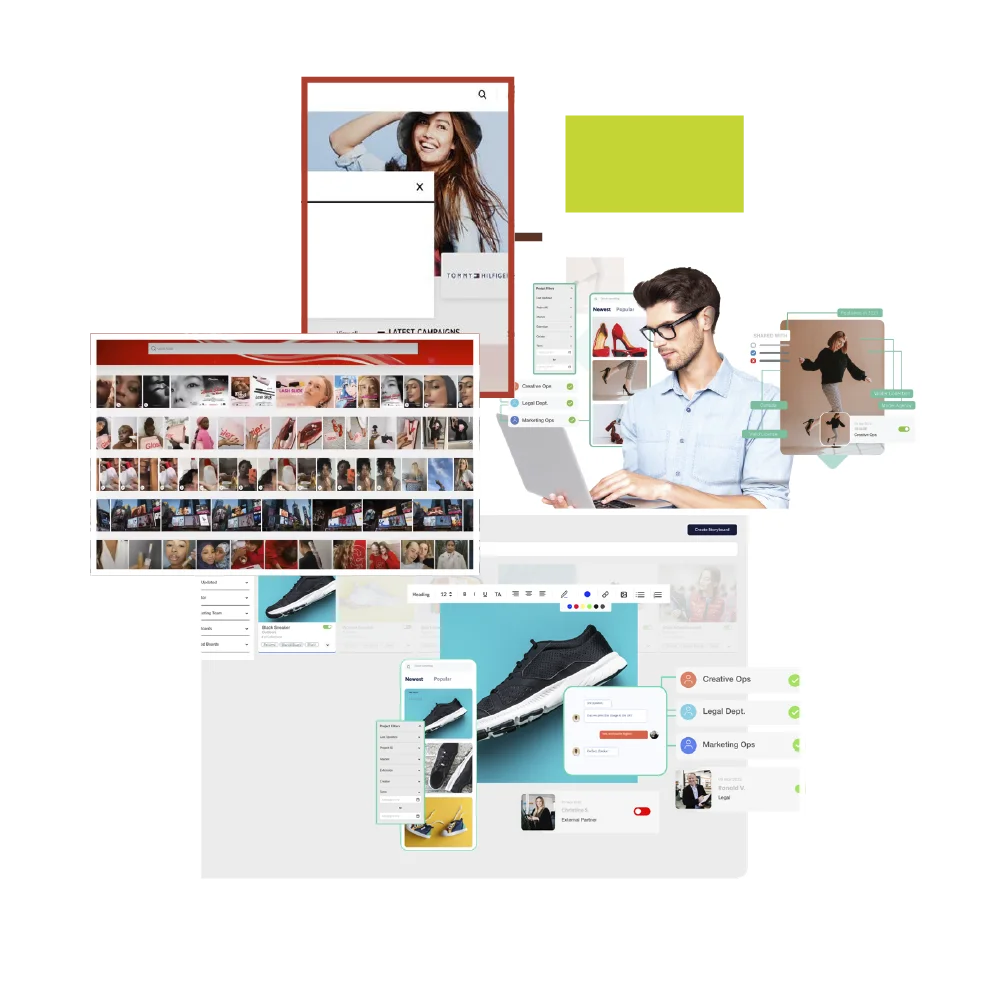
DAM Features for Effective Video Asset Management
Searching for the right digital asset management system (DAM) for video can feel like stumbling around in the dark. The time spent gathering requirements, researching applications, and reaching out to platforms can leave you more confused than before you began.

The Definitive Guide to DAM Adoption
Credits: Published by our strategic partner Tenovos.
If you’re launching a digital asset management system (DAM), you know that technology isn’t your only challenge—sometimes people are. You can have the best DAM in the industry and processes to match, but if your users don’t adhere to naming conventions or don’t categorize assets correctly, the project can devolve into a DAM quagmire. So, how do you get all the users of your DAM—from designers and partners to agencies and entire teams—to come along on your DAM adventure from the start? Your journey will involve mapping out your terrain, building your guild of allies, consulting your DAM wizards, and choosing the path to your DAM legacy.
This article will be your definitive guide to DAM adoption from the beginning. We’ll explain the process of getting users involved in selecting and rolling out your DAM, as well as the strategies you can use to ensure widespread adoption and ongoing equilibrium.
If you already have a DAM, the steps below are perfect for rethinking your adoption strategy. It’s easy for users to fall off the adoption wagon, so your strategies should be evolving to keep up. You’ll determine where to improve your engagement with your users, strengthen your desired norms, and encourage better user behaviors. From mapping out your DAM journey to setting yourself up for a legacy of success—let’s talk about how to achieve optimal DAM adoption.
1. Map out the terrain—user influence and resistance
The (not so secret) secret to DAM adoption is identifying and engaging your stakeholders early in the process. For those without a DAM (or replacing your existing DAM), it means prioritizing the needs of those who will use the DAM inside and outside your organization.
Start with a stakeholder mapping exercise—sit down and brainstorm everyone who will be using your DAM or involved in the success of implementing it. Write each name on a sticky note—from the illustrators uploading new assets, to the IT manager who will deal with support tickets. Then sort those stakeholders into quadrants:
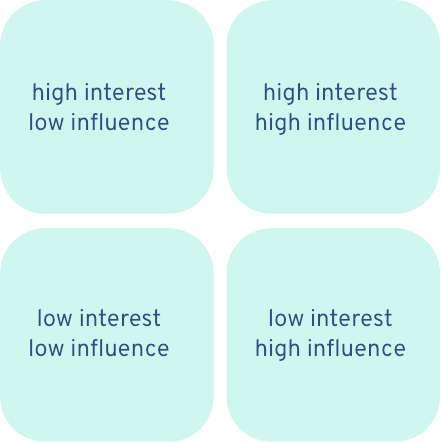
This exercise will help you determine which stakeholders should focus your energy and support on throughout the DAM adoption process.
It’s also important to conduct resistance planning. To manage resistance, you should brainstorm all the potential reasons your stakeholders might resist your new DAM—make a thoughtful, comprehensive list. Executives may lack awareness of why a change is needed. Creative teams may fear the unknown that comes along with this change. IT may resist because they anticipate a lack of support once the DAM is implemented. In this stage, you should consider your users’ concerns carefully, making note of potential blockages will help you gather their feedback and develop a communications plan that effectively addresses their concerns.
For organizations that have already implemented their DAM, it’s never too late to map your stakeholders and consider their needs. Resistance can happen at any point in the journey. Investigate how your DAM is performing with a survey, DAM usage data, or user interviews at regular intervals. You may not be able to implement a new system, but it’s never too late to revisit your users’ needs and consider why they may be resisting your processes.
2. Build your guild—recruit your DAMbassadors
After you’ve determined which users have the most influence and interest in your DAM, you should identify who among them could be your allies. Who is likely to adopt new norms quickly? Who can assist you and offer insight into team morale? Who is most invested in the DAM planning process and its success?
Determine who among your internal (and even external partners) would be willing to offer ongoing feedback and engage with the DAM process. These are your DAMbassadors and they will help you disseminate information, encourage excitement in your engagement campaigns, and uphold the norms and processes you’ll put in place.
Recruiting them could be as easy as taking the ‘high interest/high influence’ users from your stakeholder mapping and asking if they’d be interested in taking on an advisory role. It could be for a limited time as the DAM is selected and implemented, or if your DAM is already in place, you could ask them to give feedback on an ad hoc basis. Consider incentivizing this role—people are more likely to feel appreciated if they gain something from their insights. Bonus points if some of your champions are executive-level leaders—their buy-in will be important to secure budget and support across the organization.
Learn pro-tips on Maximizing your Content Value
3. Consult your wizards—plan your processes and collect feedback
It’s never too early to start thinking about governance, or how your DAM will be managed. As a part of governance, you must define processes related to users, assets, metadata, and uploads.
You will need to answer questions like:
- Will assets be uploaded manually through the DAM, via an integration, or both?
- Are you managing web assets? Video assets? Something else? How does that change your DAM needs?
- What are your file naming conventions? And where are these documented, and how are they communicated and enforced?
- Which users/groups will be permitted to edit metadata?
- Who will be responsible for archiving and expiring files?
- Who will provide DAM access to external users? Who will be responsible for training them?
- What are the different levels of access/permissions for different users and groups? How will access change if the users are external agencies, vendors, or retail partners?
Building and documenting these norms early on allows you to run them by your DAMbassadors and important stakeholders to ensure you’re considering complex user or asset challenges that may come up when choosing, implementing, or managing your DAM.
And remember that feedback shouldn’t stop at the planning stage or after you’ve implemented your DAM—continue seeking ongoing feedback from your internal stakeholders and external DAM users. Nothing halts adoption more than users feeling like their feedback and suggestions don’t matter. Consider how you can collect feedback throughout the DAM process and follow up if user feedback influenced a decision—this builds their trust.
4. Pick your path—select the best DAM for your needs
Once you’ve determined your DAMbassadors, your unique governance idiosyncrasies, and sought the feedback of your internal and external users, you’ll be ready to select your DAM.
Picking the right DAM can often feel endlessly complicated—the time spent gathering requirements, researching applications, and reaching out to platforms can leave you feeling exhausted by the options. Narrow your focus on the top features that your organization cannot function without—based on your stakeholder feedback, of course. If you’ve done Steps 1-3 thoroughly, your organization’s ideal DAM should check off all your most important boxes.
If you’ve made your case to your executive-level leadership, done your research, and considered user feedback, your choice of DAM should set you up for the ideal user adoption scenario.
5. The rallying cry—develop and execute a communications plan
Communication plans can make or break DAM implementation. A clear comms plan will ensure everyone knows how the DAM will help them achieve their goals (i.e. what they can expect from the DAM) and how they’re involved in the implementation and management of the DAM (i.e. what’s expected of users). Use face-to-face meetings, town halls, forums, and Q&A sessions to communicate with stakeholders.
The key message is simple: If the DAM works as intended and users adopt it as directed, everyone’s lives become easier. This plan defines the philosophy of the DAM, how it will be used, and how success will be measured for all users. It should include a timeline for implementation and onboarding and where users can go for ongoing DAM best practices, support, and training. You may choose to include how your organization plans to work with the DAM vendor and how the transition from the current asset system to the DAM will take place. The more clear and thoughtful your comms plan is, the more likely you’ll be to reduce friction post-launch and improve adoption.
6. Create a legacy—make onboarding and ongoing training impossible to ignore
Your DAM adventure has begun. It’s filled to the brim with users accessing your DAM for many reasons—approval workflows, sharing assets, archiving past campaigns. How do you manage to keep all those users following your carefully curated governance rules and norms? You create onboarding and training tools that are tailored-made to teach. Here are 3 DAM onboarding and training ideas to keep your journey of asset management smooth:
- Launch a frequently asked questions (FAQ) video series in your DAM
Take a page out of Webflow University’s book and make a library of quick videos to onboard users, answer common questions, and reiterate helpful governance norms. Host your FAQ library in your DAM and link its location to the dashboard of every user. Each video can be casual and even funny—the point is to make learning and relearning DAM conventions accessible and impossible to ignore. - Create a DAM help desk
Sometimes users don’t know where to get their questions answered. Creating a DAM help desk, either in person or virtually, gives them a predetermined window to come to you with questions and feedback on the DAM. Have your DAM managers, IT staff, or DAMbassadors cycle through ‘office hours’—they can be on standby until a user reaches out with a question. This also works great asynchronously as a Slack or Teams channel. - Build a governance document
Remember the governance planning you did in Step 3? Consider creating a governance resource that users can refer back to. Create an artfully designed landing page—an internal search engine that points people to common solutions to their problems. Give clear guidance on how to use common metadata terms, manage metadata, and upload assets. Include anything else that users may forget or make mistakes from time to time.
You may notice that this resource and your video FAQ library will have some overlap—it’s important to have resources available in multiple formats and places. The more accessible, interesting, and valuable this information is, the more likely your users are to adopt it.
Your DAM adoption journey begins with a single step
User adoption is the single defining characteristic of a successful DAM implementation. Are your users accessing the DAM as intended? Is it working for them as intended? In your DAM adventure, user adoption is an ongoing process—a never-ending story. But, if you can map out your desired digital asset system, bring along the right users to see it through, plan and communicate your processes, and keep people engaged—widespread adoption is possible.
For organizations with entrenched DAMs (and tired DAM managers), it’s never too late to address user adoption. There’s always the opportunity to seek feedback on how to improve your DAM processes, make training easier to access, or develop a comms plan that revitalizes users’ desire to make the DAM better.
After all, a journey of a thousand miles begins with a single step. Your adventure awaits.
Want to know what types of data your DAM should be providing? Reach us at marketing@sifycorp.com
Written by Michael Waldron, CMO, Tenovos
The Modern Marketer Needs a Data-First DAM Solution
Credits: Published by our strategic partner Tenovos.
In an era of increasing personalization, the key to successful marketing campaigns is effective storytelling that reaches the right audience with the right message at the right moment. If this chemistry between audience, content, and timing is the key to success, creative and marketing professionals have to rely on next-generation asset management technology that can guide them toward the right combinations by replacing guesswork with data, and surrounding content with context.
Traditionally, Digital Asset Management platforms (DAMs) have focused on assisting teams to manage their digital assets and move them from inside the organization to external partners and platforms. The premise is simple: a central repository where brands can store their assets alongside relevant metadata to make everything easy to find — photos and videos, logos and tear sheets, and any other brand collateral that needs to be used and reused.
At its most basic level, a good DAM solution enables marketers to do their jobs more efficiently. More modern DAMs employ AI and machine learning to automatically add relevant tags to assets, so teams can spend less time on tedious tasks like tagging or finding assets and more time on the creative and analytical areas of their jobs. The most advanced DAM platforms, however, go beyond managing and moving assets, to actually measuring their performance in their context of use.
Building a DAM for the Modern Enterprise
Over the past 20 years, the pace of change in technology has exploded, while the DAM category has lagged behind in innovation. Brands have come to expect an exceptional, personalized user experience complete with smart insights from their marketing platforms, and DAM should be no exception. As marketing becomes increasingly fast-paced and data-driven, it’s time for a completely new and different DAM experience — one that can meet the demands of an increasingly tech-savvy industry and understands its pain points.
The first and most important question that a DAM provider should ask is, ‘how does my solution help marketers do their jobs more effectively?’ That is, after all, the central goal of a DAM system: to make it easier and more efficient for creators and marketers to collaborate to design and execute successful campaigns. In other words, if finding an asset within the DAM system and searching through emails to find it take approximately the same amount of time, the system is not making teams more efficient — it’s simply adding a layer of complexity to their martech stack.
Creating a Seamless User Experience
Not all DAM platforms are created equal. One common issue that many enterprises face is the inability to seamlessly integrate their DAM platform with the rest of their marketing ecosystem, which can essentially negate the efficiencies gained by using an asset management solution in the first place. Considering that the code base of many solutions currently on the market is over a decade old (older, in some cases), this is a problem that will only get worse over time as marketers look to incorporate new tools and technologies into their workflows. Consequently, it’s important to find and implement a solution that leverages the use of modern technologies — such as AI/ML, micro-services, graph databases, and serverless environments — that will be able to maintain its speed and flexibility in the years to come.
An organization’s ability to collaborate seamlessly with team members across — and outside of — the organization is also a key indicator of the success of a DAM implementation. Marketing doesn’t happen in a single silo; from research to ideation, to creation to deployment, marketing is interconnected and interdisciplinary. A modern DAM platform should connect the enterprise in such a way that it simplifies the creative life cycle and enables marketers to reduce the friction and time required to launch each new campaign.
Data-Driven Marketers Need Data-Driven Technology
The reality is that many of the DAM solutions available on the market currently have not kept pace with the evolving needs of the increasingly data-driven marketing operation; they’re often expensive, difficult to implement, and don’t deliver the user experience marketers and creative professionals have come to expect from their technology. Seen from this angle, it’s not surprising that many organizations are hesitant to invest heavily in a new system that is not capable of demonstrating a return on investment.
Brands need modern DAM platforms that not only enable them to meet the demands of marketing in the digital age, but also help them to demonstrate — and improve — their ROI. Marketers should expect their DAM platform to provide:
- A data-first approach to asset management that allows brands to measure and optimize their processes and their content to provide increasingly personalized experiences
- A seamless user experience that drives adoption and enables teams across the world to collaborate easily
- Performance and optimization capabilities underpinned by artificial intelligence and machine learning
- Continuous improvement and delivery to support the demands of a global omnichannel enterprise
At the end of the day, companies implement a DAM solution in order to optimize their processes and improve their ability to tell the compelling stories that are central to a successful marketing operation. This optimization should come not only in the form of improving the speed of creation, but also the strategy behind a given campaign. A system that has access to all of the contextual data that surrounds your every asset should be able to distill those data into insights that inform the creation of future content.
A modern, data-first DAM should act not only as a content database but also as a source of insight to enable marketers to make smarter creative decisions, which in turn allows them to tell stories that matter to their audience.
Want to know what types of data your DAM should be providing? Reach us at marketing@sifycorp.com
Written by Michael Waldron, CMO, Tenovos
How Unreal and Unity are changing filmmaking
Ramji writes on the ‘Unreal Unity’ of technology and art…
The highly acclaimed Unreal and Unity3D engines are among the most popular tools with employed by the augmented Reality (AR), virtual reality (VR) and gaming professionals. But what in fact are these ‘engines’ and how is this new technology revolutionising cinema? In this article let us see what powers these new age solutions and how these technologies are changing filmmaking.
Imagine you are playing a computer game which is usually a set of sequences that appear at random, and you, the player, react or engage with them. All these happen in something called as ‘real-time’. In the computer graphics terminology, something happening in real-time means it happens instantaneously. When you are moving in the game or a VR environment, there is no way to predict what direction you would turn towards. And wherever you look within the game, there should be some visuals or environment with respective to your position. This is done by real-time rendering. Images or visuals that are produced instantly depending on the point of view. There are a lot of mathematical calculations that happen in milli or microseconds and the resultant images are shown to the user. These calculations and all other game dynamics are handled by the game engines.
Some of the popular engines right now are Unity3D and Unreal. It is interesting to see how these engines are evolving beyond the gaming industry. With realistic lighting, and almost realistic human character generators, these engines are blurring the lines between gaming and moviemaking.
For example, in the Disney+ series The Mandalorian, a novel idea called virtual production was used.
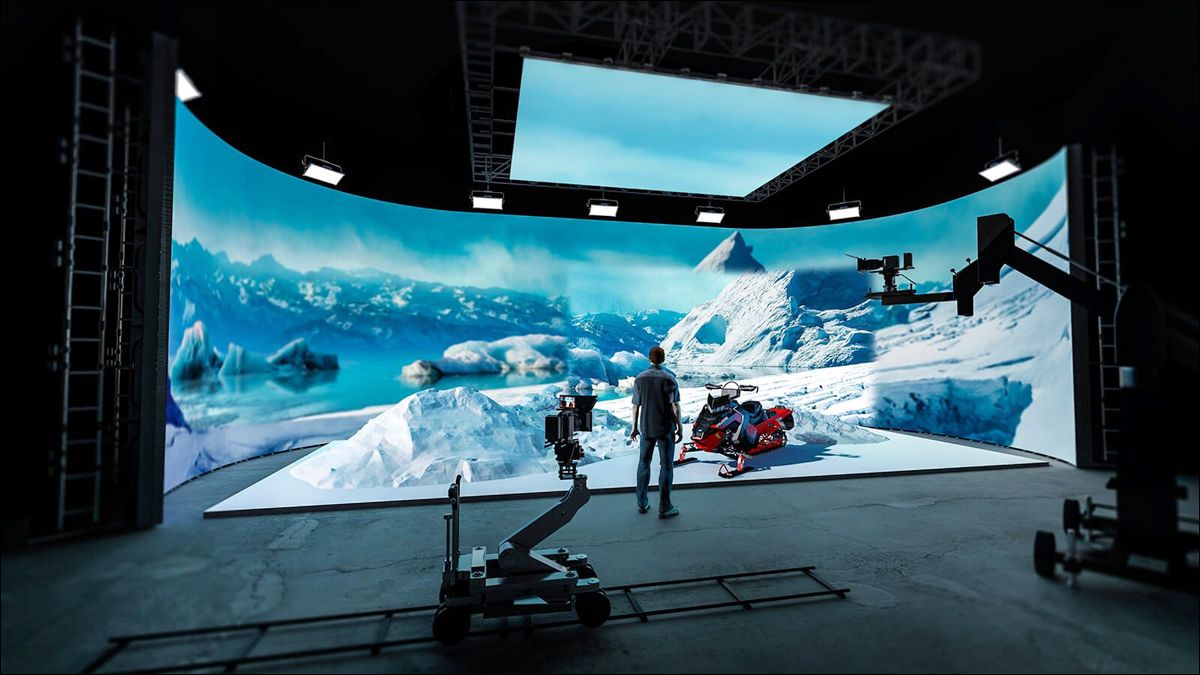
What is virtual production? This is a stage surrounded by a semi-circular LED screen on which the background or the environment is shown. The actors stand in front of the screen and enact their roles. All this while the camera records the scene with the background. This is very much like the background projections used in older movies. But the novel idea is that the backgrounds that are projected are dynamic, and the perspective will change as the camera moves. This makes the scene look realistic. And it also captures the ambient light from the background fall on the characters and the actors also know where they are located. This greatly helps in removing the usage of blue/green screen and reducing long postproduction hours.
This is how the real set and virtual set (LED Wall) is placed in the production floor. The part that is separated by the white outline is the real set with real people while the background is on the LED wall. They blend seamlessly thereby creating a continuous set.
The production team for The Mandalorian used Unreal engine to create the hyper-realistic backgrounds and these backgrounds can be changed dynamically during the filming. Using a virtual reality headset, the production team can alter the backgrounds as per the director’s vision. The real filming camera is linked to a virtual camera in Unreal engine and as the real camera moves or pans, the linked virtual camera mimics the movement thereby shifting the perspective of the (virtual) background. All these are done instantly and in “real-time”. This provides a very realistic shot, and the virtual sets can be quickly changed or altered in a jiffy!
Not only this, but there are also other dynamics like the time of the day that are made available to the filming team. They are provided by web-based controls on an iPad using REST APIs. This enables the production team to change the lighting, sky colour and time of the day all instantly. This saves a lot of time for the team and helps in improvising the shot or scene on the go.
Not the one to be left behind, Unity3D, is another popular engine that is in the fray of creating hyper-realistic movie-quality renders. They recently released a teaser called Enemies which involves completely computer-generated imagery complete with high-definition render pipeline (HDRP) for lighting, real-time hair dynamics, raytraced reflections, ambient occlusions, and global illumination. Well, these terms themselves will warrant a separate article. That’s for another day and time. Here, take a look at the teaser:
In this case, the entire shot is computer generated including the lady character. Unity3D has its own set of digital human models and Unreal has its Metahuman package that offer hyper-realistic digital characters which can be used in real-time.
This is just the tip of an iceberg. The possibilities are endless, and it is a perfect amalgamation of two fields, and this opens a lot of doors for improving filmmaking with real-time rendering technology and the line between gaming and filming are blurred by game changing technology revolutions driven by Unreal and Unity3D!
In case you missed:
- VFX – Dawn of the digital era
- VFX – The evolution
- VFX: The beginning
- Is Augmented Reality the future of retail?
- The future of training is ‘virtual’
- Putting the ‘Art’ in Artificial Intelligence!
- Into the Metaverse