


Table of contents
As enterprises scale AI, data centers must host GPU clusters, high-density compute racks, and massive training datasets. These environments behave very differently from traditional IT systems, which were predictable, centralized, and easier to secure. AI workloads, on the other hand, constantly move data across racks, zones, clouds, and regions — overwhelming security and compliance models that depend on static boundaries and controlled traffic flows.
The result is a widening gap in data center security and compliance frameworks.
AI introduces:
- Massive and continuous data movement across racks, zones, and regions
- Multi-cloud dependencies that stress legacy controls
- Shared GPU infrastructure with far greater lateral movement risk
- New attack surfaces across training, inference, and model promotion paths
To securely scale AI, enterprises must modernize data center security architectures from the ground up.
Recommended read: How data centers are evolving to power AI workloads
How AI Workloads Change the Security Requirements Inside Data Centers
AI fundamentally changes what a data center must protect. Instead of stable, predictable applications, enterprises now run fast-moving pipelines that touch sensitive data, shared GPU fleets, and distributed compute environments.
These shifts introduce new security pressures that traditional data center architectures were never designed to withstand. Let’s take a look at how AI workloads are changing security requirements inside data centers.
AI workloads concentrate highly sensitive data — including personal information, behavioral analytics, operational telemetry, and proprietary documents — into training pipelines. The aggregation of such data makes AI environments significantly more valuable targets than traditional applications. A single compromise can reveal far more than in conventional workloads.
High-density GPU clusters also introduce new lateral movement paths. GPUs are often shared across teams or business units, and when isolation is implemented only through software constructs like namespaces, an attacker who compromises one workload may be able to reach others on the same physical hosts. This risk is far higher than in CPU-only environments.
AI pipelines also distribute data extensively inside and outside the data center. Unlike traditional applications that keep most of their data in place, AI workloads constantly move datasets between racks, zones, and clouds during training, validation, and deployment. This creates a large attack surface that traditional controls were never designed to handle.
Security Gaps Inside Data Centers That Put AI Workloads at Risk
AI workloads surface longstanding weaknesses that remained hidden in traditional environments. When GPU clusters, distributed pipelines, and sensitive datasets enter the picture, these cracks widen quickly. The following gaps are the most common — and the most consequential.
Weak Segmentation of GPU and AI Compute Zones
Many organizations rely solely on software-level segmentation such as Kubernetes namespaces or virtual network rules. However, these are still forms of logical isolation, not physical separation. If a container escapes into the host or a misconfigured driver exposes the node, the attacker may gain access to other workloads running on the same GPU fleet. For AI workloads — especially those using regulated or high-value training data — relying exclusively on soft isolation significantly increases risk.
Unsecured East–West Traffic Within the Data Center
AI workloads transfer huge volumes of data internally during ingestion, preprocessing, and training. Yet most data centers still do not encrypt east–west traffic, assuming that internal networks are inherently trusted. This assumption no longer holds in an AI environment where compromise of a single container or node can enable attackers to capture unencrypted internal traffic, perform man-in-the-middle attacks, or tamper with data in transit.
Inadequate Access Governance for High-Sensitivity AI Data
Training datasets often live in shared storage pools where permissive access controls are the norm. Data scientists, engineers, and automation systems frequently have broad read/write permissions for convenience. While this accelerates experimentation, it also creates security blind spots. Without fine-grained access governance, sensitive datasets become vulnerable to insider misuse, accidental exposure, and external compromise.
Poor Secrets & Key Management Across Compute Nodes
AI environments still exhibit outdated practices such as hardcoded credentials in training scripts, shared SSH keys across teams, and API tokens stored in plain text. Because GPU clusters often run distributed workloads, a single exposed credential can provide lateral access to every node participating in a training workflow. Poor secrets hygiene magnifies the blast radius of any breach.
Insufficient Monitoring of Model/Data Integrity
Traditional monitoring tools focus on system logs and performance metrics — not on the integrity of datasets, model files, or inference pipelines. This means organizations may not detect when training data has been poisoned, when model weights have been tampered with, or when a model has been silently swapped out. These integrity risks can lead to incorrect predictions and major operational failures without triggering conventional alerts.
Outdated Physical and Environmental Controls
AI racks run significantly hotter than CPU-focused infrastructure. Older data centers may lack the cooling efficiency, access controls, or environmental monitoring needed to protect dense GPU deployments. Overheating or physical tampering can jeopardize not just hardware, but the sensitive models and datasets stored on these systems.
Read about the risks of poor data center capacity management in the AI era.
A Framework to Secure AI Workloads in Modern Data Centers
To close the gaps that AI exposes inside traditional facilities, enterprises need a security model designed specifically for GPU-driven, data-intensive workloads. The following framework outlines the foundational controls required to secure AI at the data center layer.
Build Data-Centric Security Inside the Data Center
AI workloads require encryption not only for storage but also for the movement of training datasets within the environment. Segregating datasets based on sensitivity ensures that only authorized pipelines can access regulated or high-risk data. This minimizes exposure and reduces the impact of insider threats or accidental leakage.
Adopt Zero-Trust Segmentation for GPU and Compute Clusters
Identity-based segmentation should operate at the node and rack levels, ensuring that only approved workloads run on specific GPUs. This creates hard isolation boundaries that prevent experimental or untrusted jobs from sharing infrastructure with crown-jewel models.
Secure East–West Traffic and Regional Replication
AI data must be encrypted and authenticated even inside the data center fabric. By securing replication across zones and regions, organizations can ensure compliance with data residency laws while preventing internal interception or tampering.
Automate Compliance Through Governance-as-Code
Embedding compliance logic directly into infrastructure pipelines allows enterprises to enforce policies consistently across networks, storage systems, telemetry streams, and replication workflows. Governance-as-code also simplifies audit preparation by producing continuous compliance evidence automatically.
Deploy Unified Observability at the Data Center Layer
AI-ready observability must track data lineage, model access patterns, GPU behavior, and workload integrity. By correlating signals across the stack, enterprises can detect anomalies early — such as unexpected model drift, unauthorized access, or training irregularities — that traditional logging systems would miss.
How Sify Technologies Helps Secure AI Workloads
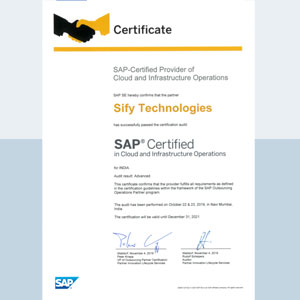
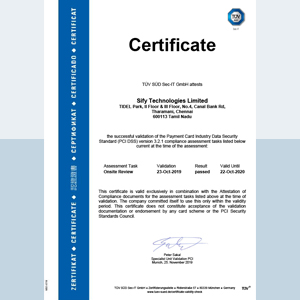
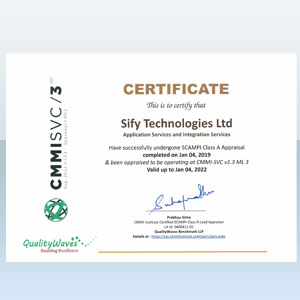
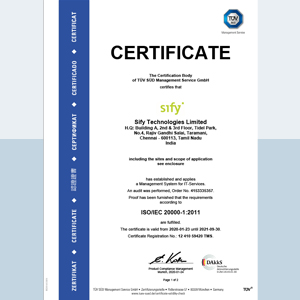
Sify Technologies provides AI-ready data centers designed for hard GPU isolation, secure data movement, and compliance automation. Isolated GPU zones and hardened compute clusters ensure workloads remain separated by purpose and sensitivity. CloudInfinit enables encrypted interconnects for cross-region and cross-cloud AI pipelines. InfinitAI offers predictive anomaly detection and complete lineage visibility, while Sify’s Managed Security & Compliance Services automate policy enforcement and audit readiness. Together, these capabilities form a tamper-proof operational foundation for AI workloads.
Learn about Sify data center solutions here.
Securing the Future of AI in Enterprise Data Centers
AI workloads demand more from data center security and compliance frameworks than traditional applications ever did. Legacy assumptions — that internal networks are trusted, that logical isolation is sufficient, or that compliance certifications equate to security — no longer hold. Modern enterprises must strengthen segmentation, encrypt internal traffic, govern dataset access, enforce model integrity, and adopt unified observability to operate AI safely at scale. Those that modernize now will be positioned to deploy AI with confidence; those that delay will face growing operational, regulatory, and reputational risks.
Connect with our experts today to know more.